Hotline: +381 61 63 84 071




Between two baskets, conversations that cannot wait: young people in Vranje discuss violence, equality and solidarity
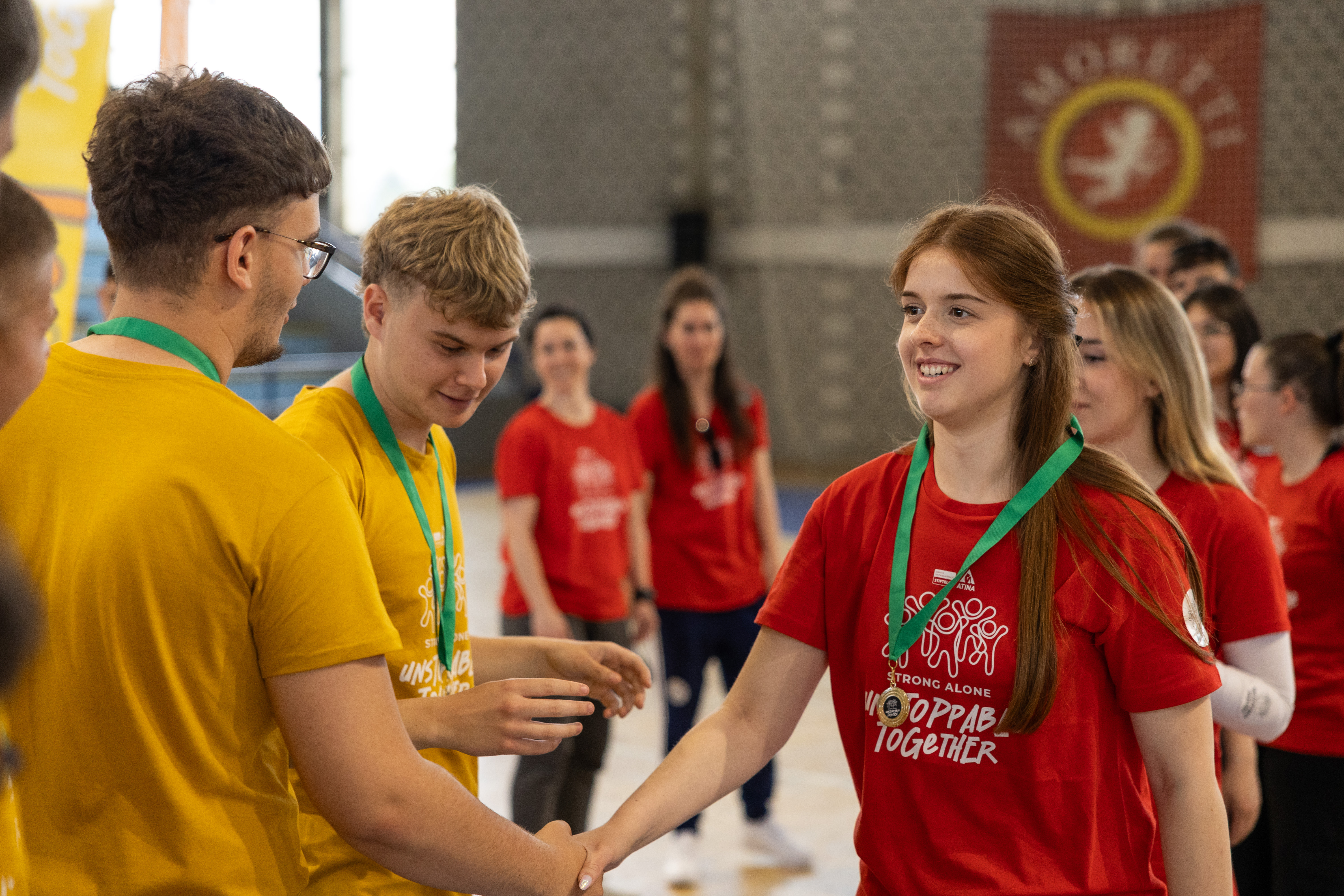
Photo: Dragan Spasov
Between two baskets, conversations that cannot wait: young people in Vranje discuss violence, equality and solidarity
While some were playing basketball, others were discussing discrimination, gender equality, violence and human trafficking. On a basketball court in Vranje, between matches and cheering, space opened up for questions that go far beyond the final score: how do we recognize injustice, why do we remain silent about certain problems, and how important is it for young people to have the opportunity to speak about them in their own voices?
In May 2026, young people aged 16 to 22 gathered in Vranje for a 3x3 basketball tournament organized as part of the project “Strong alone, unstoppable together - sport for social justice”, implemented by NGO Atina with the support of the Swedish Postcode Lottery Foundation.
The tournament brought together sporting competition, socializing and conversations about issues that directly affect young people's lives. As teams took turns on the court, participants had opportunities to exchange opinions, share their concerns and reflect on how discrimination, stereotypes and different forms of violence can be recognized in everyday life.
Conversations in front of the camera added another dimension to the event, allowing young people to share their reflections on topics that often remain outside everyday discussions about sport.
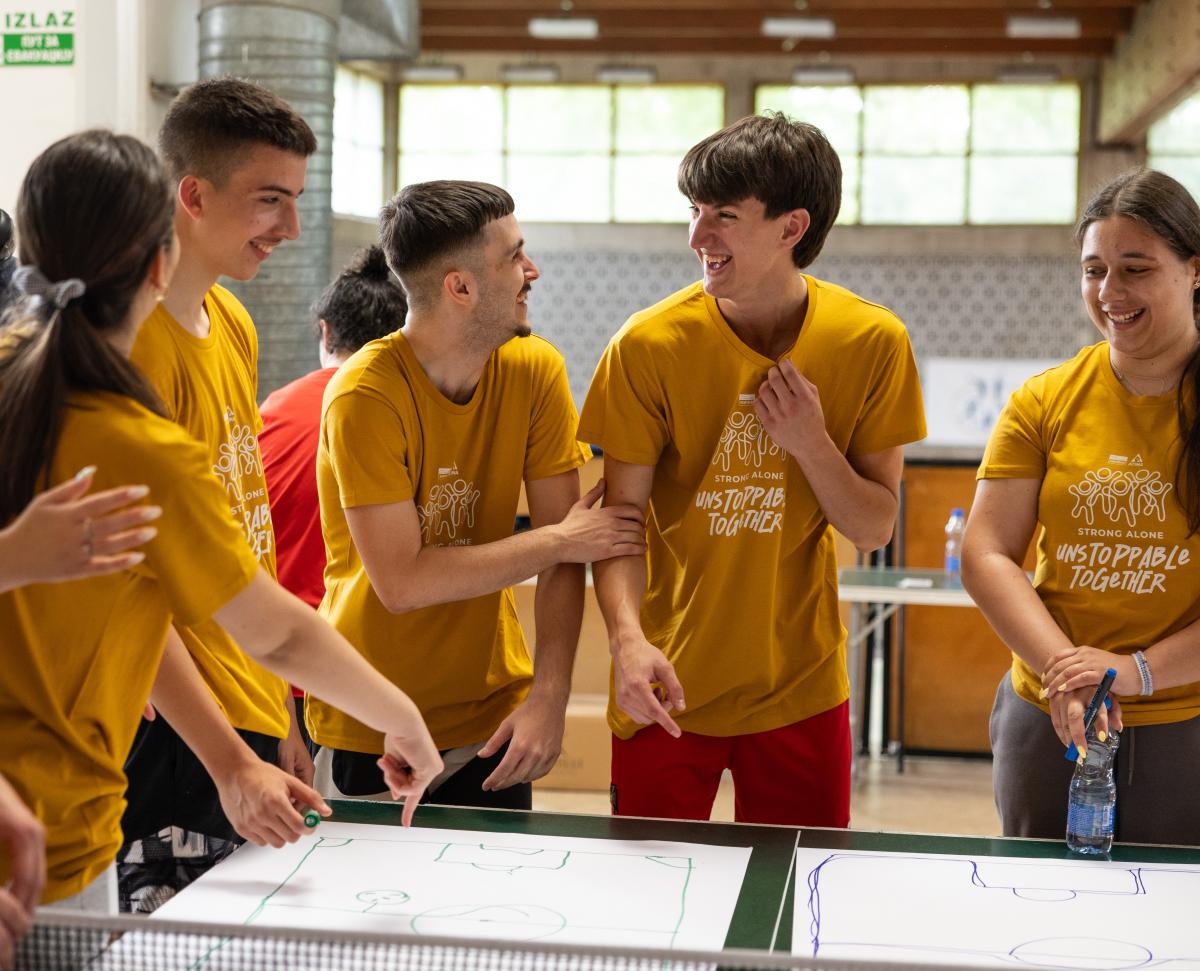
Photo: Dragan Spasov
When the match ends, the conversation is just beginning
Sport can bring together people who might otherwise have few opportunities to meet. A shared interest, the game's dynamics, and the atmosphere on the court can make it easier to connect and create opportunities for conversation.
But simply bringing people together isn't enough to drive social change.
What matters is what happens when young people are given the opportunity, alongside playing sport, to talk about what genuinely interests, concerns, or affects them.
At the tournament in Vranje, the breaks between matches became opportunities for precisely this kind of exchange.
Participants discussed gender equality, stereotypes, discrimination, gender-based violence and human trafficking. They discussed how they recognize these issues in their surroundings, why they matter, and why they need to be discussed openly.
Not everyone had the same experiences, and not everyone gave the same answers to every question. This diversity of perspectives is itself an important part of the learning process.
Conversations about social issues don't have to begin in a classroom, nor do they have to rely on predetermined answers. Sometimes the most important thing is to create an opportunity for young people to ask the questions they themselves consider important.
This approach is particularly significant when discussing the prevention of violence and discrimination, because young people are not simply an audience to whom information needs to be delivered. They participate every day in social relationships where stereotypes, inequalities, and different forms of exclusion can be recognized and challenged.
We need to talk about violence before it becomes someone's personal story
When gender-based violence and human trafficking are discussed, public attention often focuses on individual cases, the experiences of survivors or the circumstances in which exploitation occurred.
These experiences deserve attention and an appropriate societal response. However, prevention requires starting conversations much earlier.
We need to talk about social norms that justify control and inequality, stereotypes that restrict freedom of choice, discrimination that excludes certain people from opportunities, and power relations in which trust can be abused.
It is particularly important to understand that violence is not merely an individual's problem or a private family matter. It has social causes and consequences, and institutions also bear responsibility for preventing it and protecting those who experience it.
Young people therefore need access to reliable information about their rights, available protection mechanisms and forms of support.
But it is equally important that they can discuss questions that do not have simple answers: why certain violent behaviors become normalized, why people experiencing violence sometimes face judgment instead of support, and how to respond when we notice that someone is experiencing discrimination or abuse.
Violence prevention does not begin only after violence has occurred. It also begins when we question the attitudes and behaviors that allow violence to go unrecognized, justified, or unchallenged.
This is precisely why conversations during sporting events are an important part of Atina's approach to working with young people.
When young people speak on camera, how we listen matters too
One interesting element of the tournament in Vranje was the conversations recorded on camera.
They gave young people a chance to share their thoughts on social issues beyond the usual workshop or group discussion format.
However, when we talk about young people's participation in public spaces, it is important to distinguish between allowing someone to express themselves and expecting them to speak.
Particularly when discussing sensitive issues such as gender-based violence, discrimination or human trafficking, participation in public conversations must be voluntary, respect privacy and recognize every person's right to decide what they wish to share.
Young people do not have to disclose personal experiences or talk about their own difficulties for their contributions to be valuable.
Their questions, opinions, critical reflections and proposals are equally important.
For Atina, meaningful youth participation means more than simply enabling young people to speak. It also means taking what they have to say seriously.
Young people's voices should not merely decorate project activities. Their perspectives should influence how we design programs, identify needs and create opportunities for change.
This matters especially in violence prevention, where programs become far more relevant when they take young people's real concerns, experiences, and questions into account.
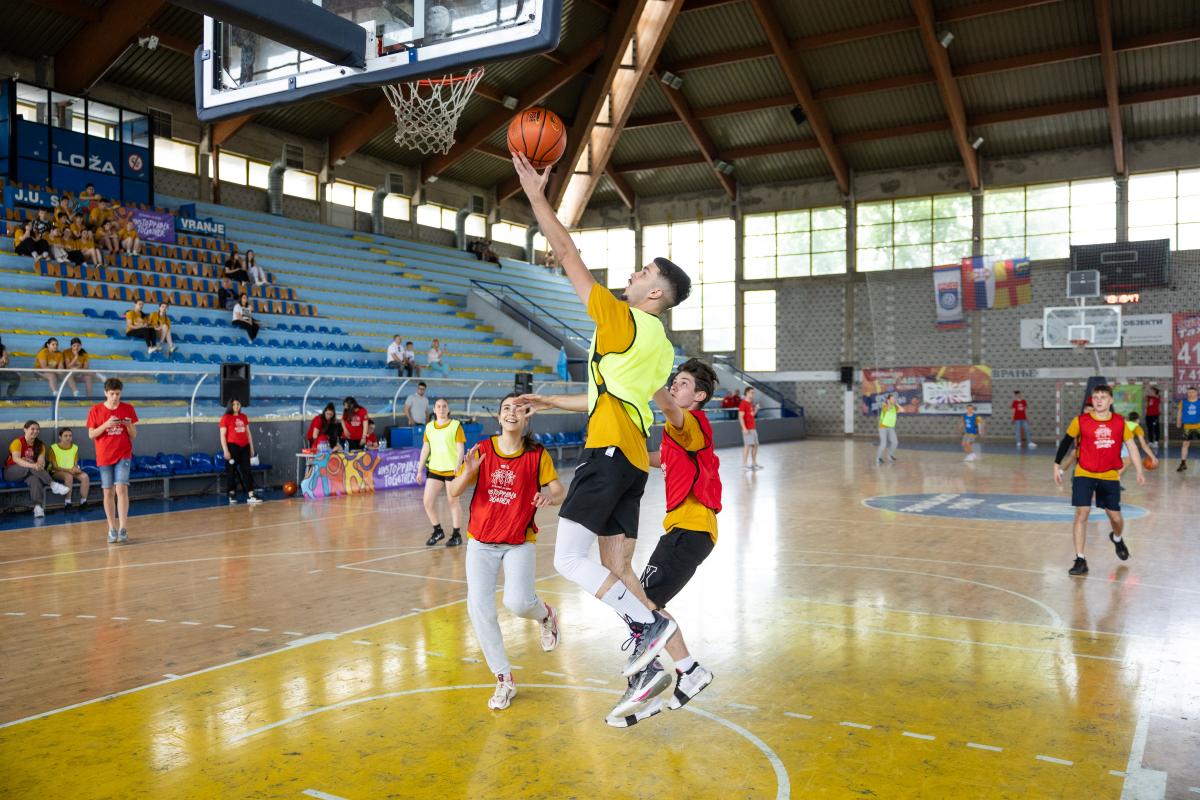
Photo: Dragan Spasov
3x3 basketball: a small court, a great deal of responsibility
3x3 basketball has its own distinctive dynamics. With only three players per team on the court, the game moves quickly, and every decision and individual contribution immediately affects the collective result.
In this kind of game, there is little room for passive observation. Players need to respond, communicate, adapt, and take responsibility.
This is why basketball can be an interesting starting point for conversations about cooperation, mutual trust, and each individual's role within a group.
However, the important lesson is not simply that a team functions better when everyone cooperates.
Equally important is whether everyone genuinely has an opportunity to contribute.
Is everyone's voice heard? Are mistakes accepted as part of learning? Is support offered only to the best players, or also to those who need more encouragement?
These questions connect sport with broader social relationships.
At school, among peers, and in the community, young people also encounter situations where some people's contributions are valued more highly, some opinions are more easily dismissed, and some people are present without any genuine opportunity to participate.
Sport can therefore provide a space to learn about equality, but only when it is organized in ways that encourage respect, cooperation, and the inclusion of all participants.
Sanja, one of the tournament participants, captured this idea in a simple message:
“The game takes on its true meaning when everyone has the opportunity to be part of it.”
Her words speak to something that goes beyond basketball.
A court alone is not enough. What matters is that everyone has the opportunity to step onto it.
The right to participate does not end on the sports court
One of the central ideas of the project “Strong alone, unstoppable together - sport for social justice” is that young people should have more opportunities to participate in their communities, recognize social problems, and help address them.
Sport is one way to create those opportunities.
But its value comes from more than physical activity or competition. It also lies in the chance to build relationships, open conversations, and question social norms by playing together.
The tournament in Vranje demonstrated how a single sporting event can simultaneously provide space for competition, socializing, and discussions about issues that young people consider important.
What was particularly significant in this process was that participants had the opportunity to speak for themselves about discrimination, gender equality, violence and human trafficking.
Such conversations cannot, on their own, resolve complex social problems. But they can make these problems more visible, encourage more open discussion, and help young people develop the knowledge and perspectives needed to recognize them.
At the same time, young people alone cannot be left responsible for creating safer and more just communities. We need institutions that protect rights, schools that don't tolerate discrimination, sports clubs open to everyone, and organizations that create opportunities for equal participation.
Because a society in which everyone has the right to participate is not built simply by inviting people to be present. It is built by creating conditions in which their voices are heard, their dignity is respected, and their rights are protected.
Perhaps the tournament's most important message in Vranje is this: between two baskets, two matches, and two conversations, there are countless opportunities to begin changing the way we treat one another.
And sometimes change begins with something very simple: giving someone space to speak and showing we are ready to listen.
The 3x3 basketball tournament was held in Vranje in May 2026 as part of the project “Strong alone, unstoppable together - sport for social justice”, implemented by NGO Atina with the support of the Swedish Postcode Lottery Foundation.




 FACEBOOK
 TWITTER
 YOUTUBE