Hotline: +381 61 63 84 071




Belonging does not mean being the same
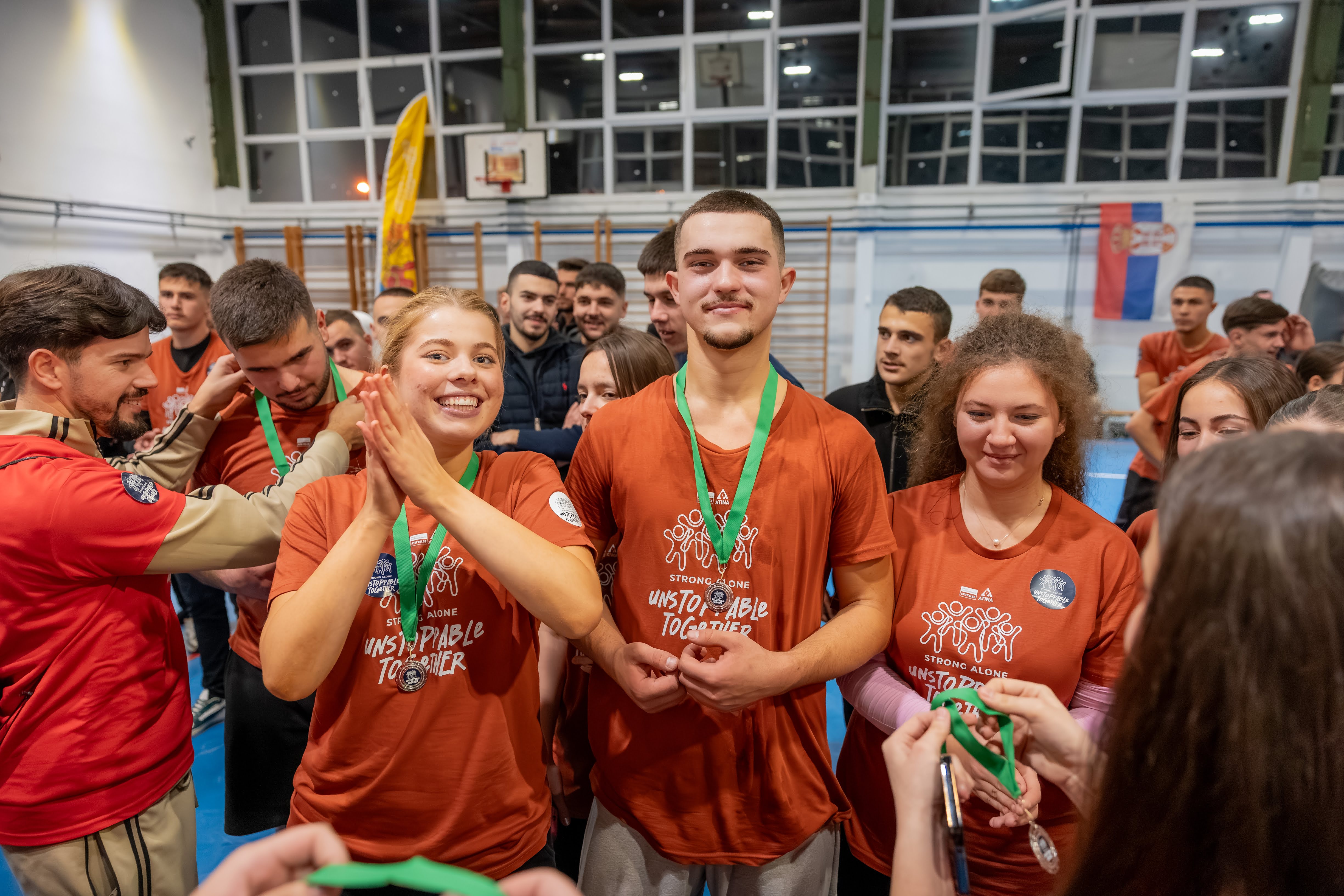
Photo: Tarik Zećirović
Belonging does not mean being the same
How often do we get to know someone who lives in the same community as we do but has different experiences, traditions, or perspectives on the world? Is living alongside one another enough for us to know each other truly? And how important is it for young people to have spaces where they can connect beyond their usual social circles?
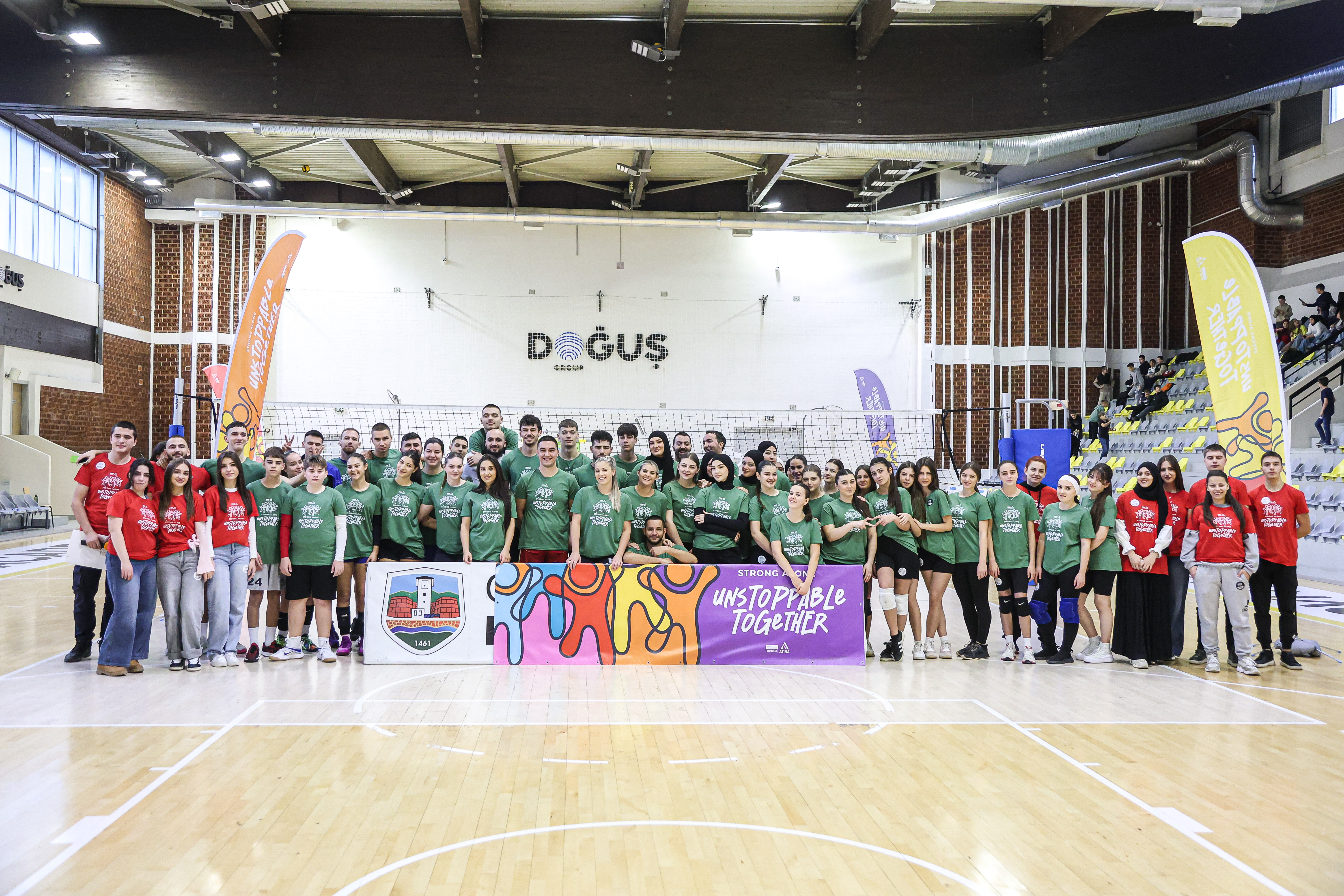
In December 2025, a volleyball tournament in Tutin brought together 60 young people from different communities, allowing them to build new connections, develop mutual trust and strengthen their sense of belonging through sport, socializing and shared activities.
The tournament was part of the project “Strong alone, unstoppable together - sport for social justice”, implemented by NGO Atina with support from the Swedish Postcode Lottery Foundation.
Although volleyball brought us together, the significance of this event was not measured solely by the number of matches played or points scored. More important was what playing together could make possible: meeting, talking, and cooperating with people we may not know well, but with whom we share the same spaces, everyday lives, and the future of our community.
Living together is not the same as knowing one another
In many local communities, young people grow up within different social circles. Their everyday lives are shaped by the schools they attend, the places where they spend their free time, family ties and friendships, and social expectations that influence whom they connect with.
These differences in experience are not a problem in themselves. On the contrary, they are an important part of what makes every community rich and diverse.
However, when there are too few opportunities for shared activities, meeting one another, and exchanging perspectives, our perceptions of others risk remaining based on assumptions rather than genuine encounters.
This is why it is important to create spaces where young people can move beyond their usual circles, get to know one another, and build relationships not predetermined by their background, identity, or social circumstances.
Belonging to a community does not mean that we all have to be the same. It means our differences must never become a reason someone has fewer opportunities to participate, be accepted, or exercise their rights.
This is one of the central ideas behind the project “Strong alone, unstoppable together”.
Through sporting events, workshops, and youth-led initiatives, Atina seeks to create environments where differences are not barriers to cooperation but opportunities for mutual learning and connection.
The volleyball tournament in Tutin was one such opportunity.
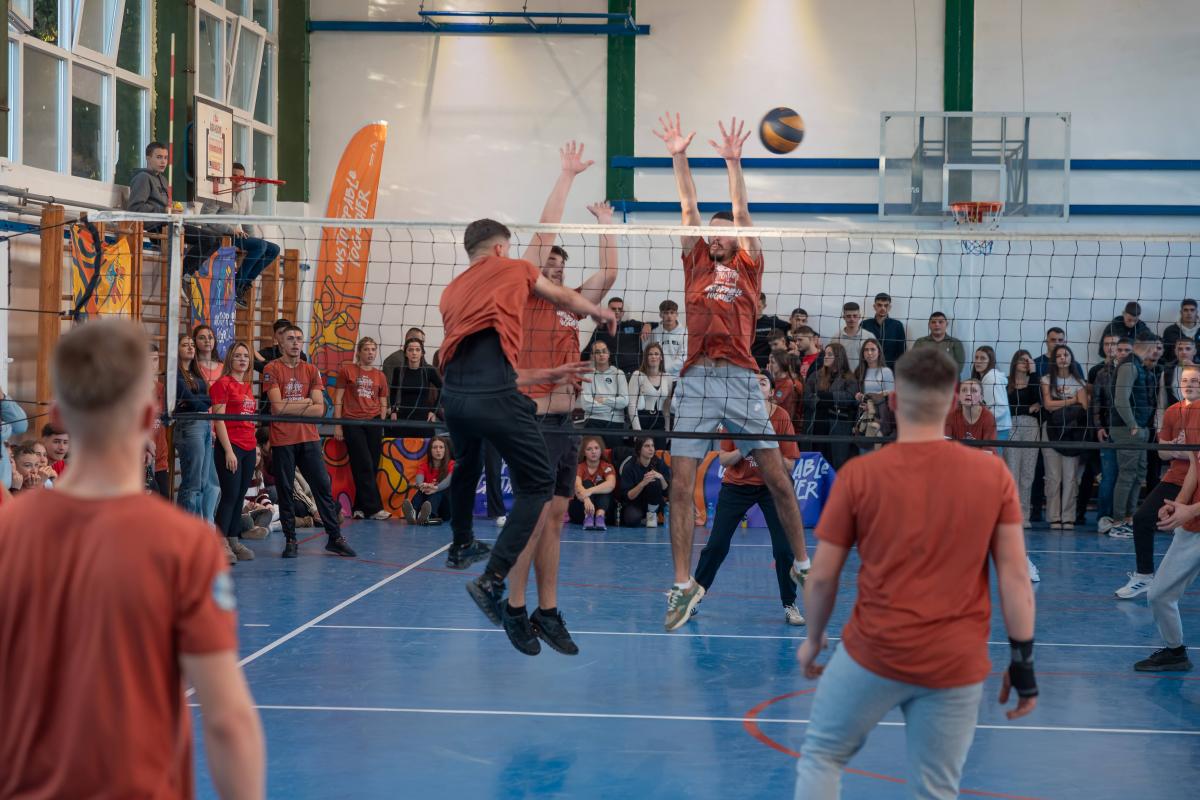
Photo: Tarik Zećirović
When a shared goal creates opportunities for new connections
Volleyball is a team sport in which cooperation is essential. Every point depends on a series of decisions, communication between players, and their willingness to rely on one another.
On the court, there is little time for lengthy discussions or explanations. Players need to recognize situations, respond, offer support, and trust that teammates will do their part.
This is precisely why playing together can create opportunities for connection among young people who may not have known one another well before.
During the tournament in Tutin, the matches provided opportunities for sporting competition, but also for a shared experience in which communication, mutual respect and cooperation played an important role.
Such experiences are particularly valuable because they let us build relationships based on more than what we already know or assume about someone.
When we share responsibility for a common goal, we can get to know someone through their actions, abilities, communication, and how they treat others.
This does not mean that a single sporting event can, by itself, eliminate social prejudice or overcome existing differences. Such changes require time, continuity and broader social engagement.
But every space where young people can cooperate on an equal footing can be an important starting point for building mutual trust.
We do not have to erase our differences to feel connected
One key message we want to promote through this project is that social inclusion does not require people to give up their identities.
Young people should not have to suppress their languages, traditions, experiences, or identities to be part of a shared space.
Instead, a society that respects diversity should let everyone participate as they are, without pressure to conform to a single, predetermined idea of what it means to belong.
This is particularly important when working with young people, because adolescence and early adulthood are periods when not only personal identities are shaped, but also perceptions of others, social relationships, and one's place in the community.
When young people have opportunities to meet, cooperate and exchange experiences, they can begin to question stereotypes and develop relationships based on mutual respect.
During the tournament in Tutin, accompanying activities and conversations between matches gave participants opportunities to talk about their families, traditions, concerns and hopes for the future.
These conversations matter because they remind us that every person has far more identities, experiences, and interests than a single social category can capture.
Someone may belong to a particular ethnic or religious community while also being an athlete, a student, a friend, or a young person thinking about education, employment, family, or leaving their hometown.
When we see others through only one aspect of their identity, we risk overlooking what makes them unique.
That is why opportunities for direct interaction and shared action matter for moving beyond simplified perceptions of others.
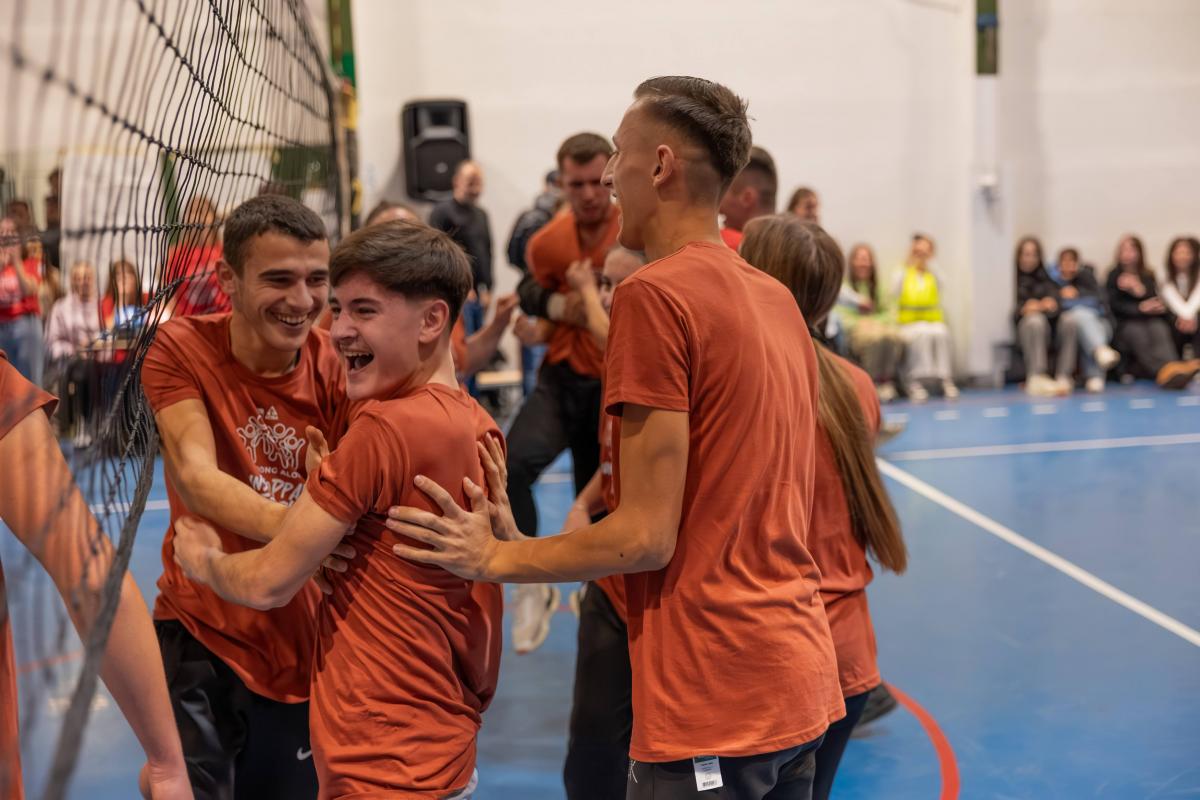
Photo: Tarik Zećirović
Respect does not end when the match is over
“Sport teaches us that respect is more powerful than any victory,” said one tournament participant.
This message captures the values Atina seeks to promote through sporting activities with young people.
In sport, wanting to win is natural. Competition can be exciting, motivating and important for developing different abilities.
But the way we compete says a great deal about how we treat others.
Do we respect our opponents? How do we react when we lose? Can we acknowledge someone else's success? Do we support those who are struggling? And can we take part in a shared game without feeling the need to belittle or exclude others?
These questions matter beyond the sports court.
In everyday life, young people encounter different forms of competition, comparison and social expectations. Success, popularity, and the ability to stand out are often highly valued, while people pay less attention to cooperation, solidarity, and responsibility toward others.
This is why it is important to create opportunities where success is measured not only by individual achievement, but also by how we contribute to a shared experience.
Respect is not a reward that someone must earn through victory, achievement or membership in a particular group. It belongs to every person.
This is precisely what connects sport to human rights and social justice.
A community where there is room for diversity
One of the project's key goals, “Strong alone, unstoppable together,” is to create more opportunities for young people from different ethnic, social, migrant, and refugee backgrounds to meet and cooperate.
This approach is based on the understanding that social cohesion does not happen automatically and cannot be built through messages of tolerance alone.
What is needed are genuine spaces where people can get to know one another, cooperate, discuss their experiences and participate in shared activities.
But it is equally important to recognize that young people alone cannot be responsible for building inclusive communities.
Schools, local institutions, sports clubs, civil society organizations, and other stakeholders have a responsibility to create conditions where everyone can access these opportunities, regardless of background, gender, financial circumstances, or other personal characteristics.
This is why sporting tournaments organized through the project are not isolated events, but part of a broader program connecting non-formal education, life skills development, violence and discrimination prevention, and active youth participation.
The volleyball tournament in Tutin brought together 60 young people through a shared game, while also creating space for something equally important: meeting one another, having conversations, and experiencing how differences don't have to drive us apart.
Experiences like these can help build communities where belonging doesn't depend on how similar we are, but on whether we all have an equal right to participate in community life.
*Because the right to belong should not come with an obligation to be the same. It should mean that there is a place for every one of us, with all the differences we bring.
The volleyball tournament in Tutin was held in December 2025 as part of the project “Strong alone, unstoppable together - sport for social justice”, implemented by NGO Atina with the support of the Swedish Postcode Lottery Foundation.




 FACEBOOK
 TWITTER
 YOUTUBE