Hotline: +381 61 63 84 071





Football is not just a men's game: young people in Bujanovac are changing the rules on and off the pitch
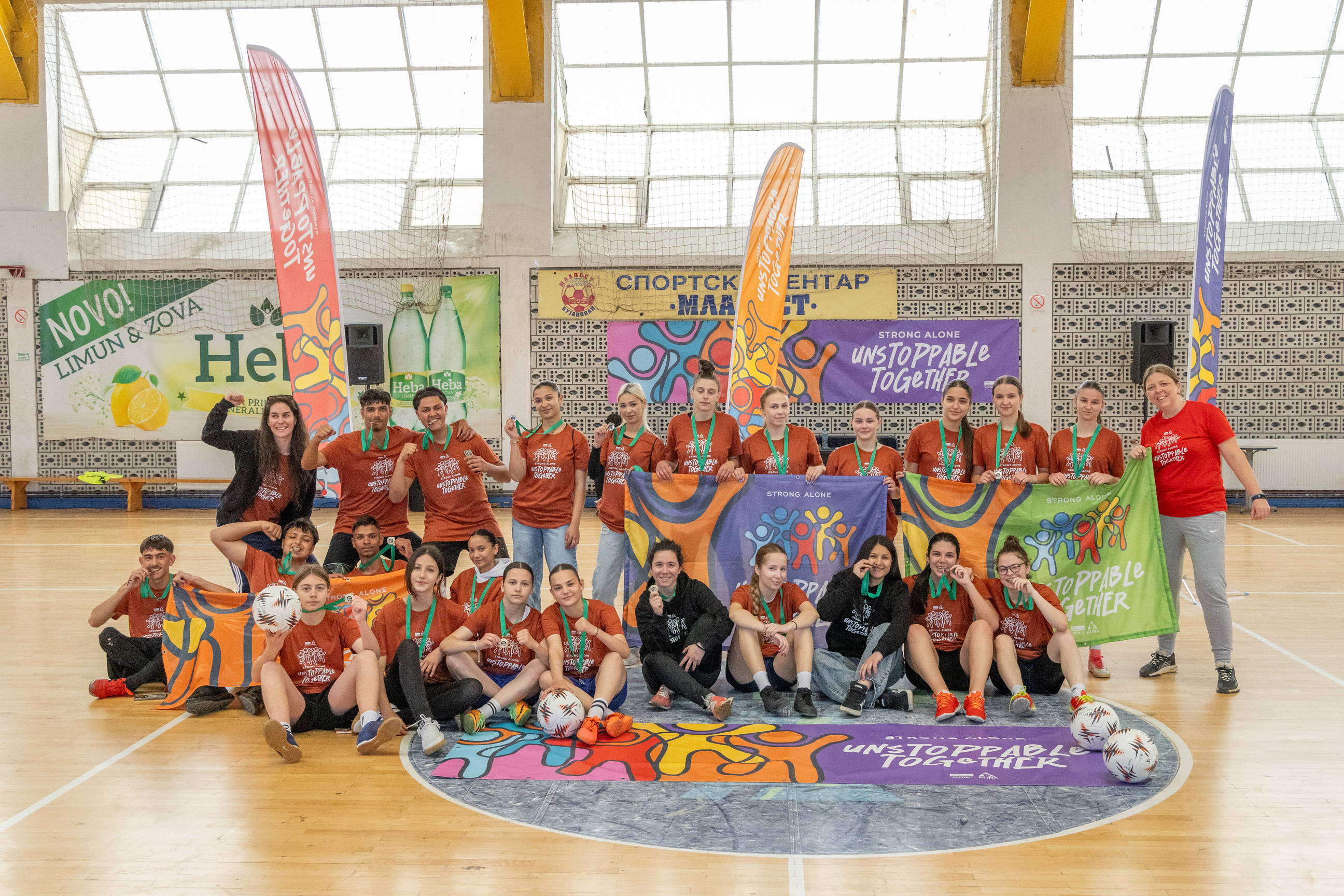
Photo: Dragan Spasov
Football is not just a men's game: young people in Bujanovac are changing the rules on and off the pitch
Who decided that football is primarily a men's sport? Why do girls and young women still so often face expectations that certain sports are not for them? And what changes when we stop dividing activities into “men's” and “women's” and start creating spaces where everyone has an equal right to participate?
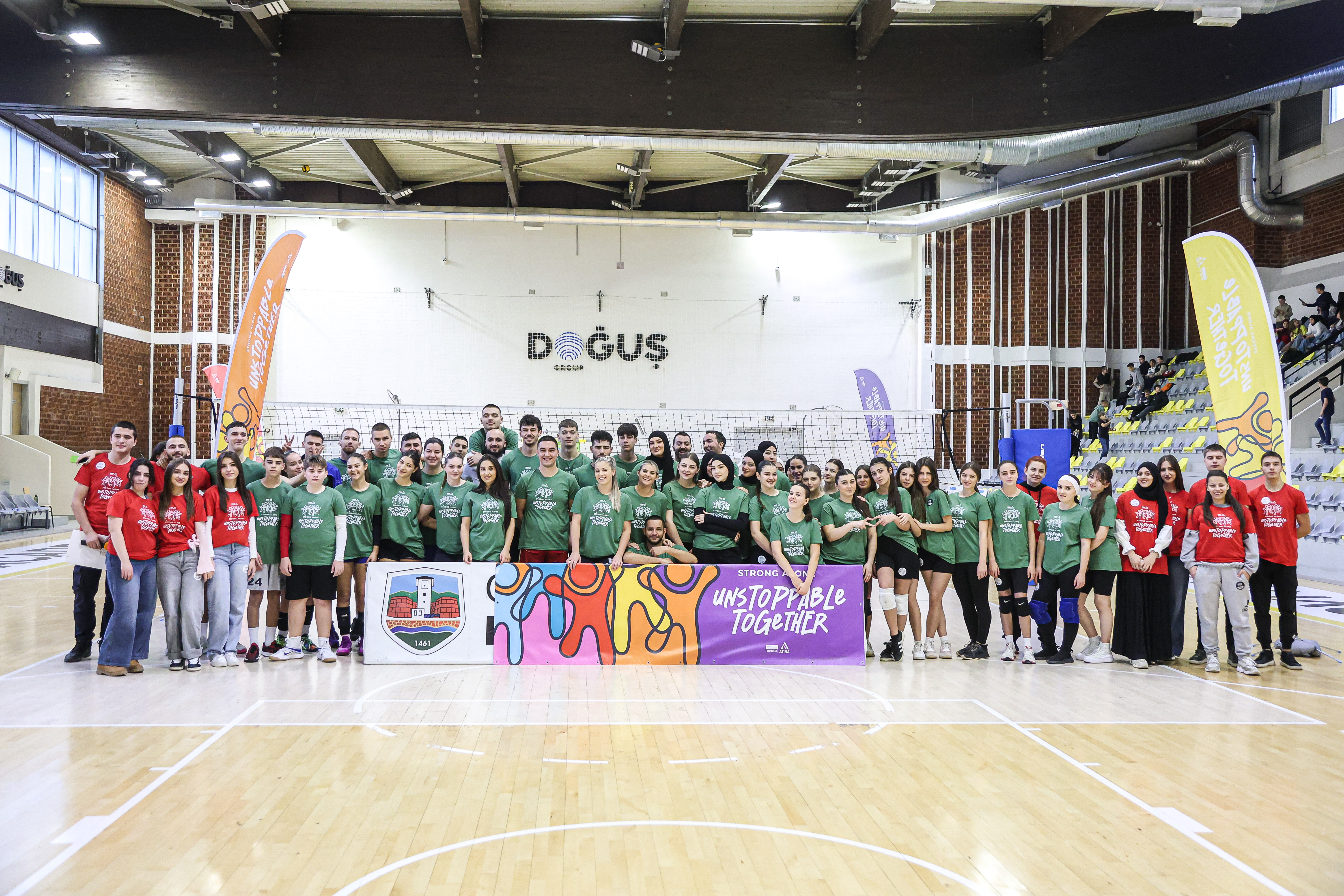
At the Mladost sports hall in Bujanovac, on 17 May 2026, football was about much more than competition. During a four-hour tournament, young people aged 16 to 22 came together to play, meet one another, cheer each other on and discuss issues that matter in their lives.
The tournament was part of the project “Strong alone, unstoppable together - sport for social justice”, implemented by NGO Atina with support from the Swedish Postcode Lottery Foundation.
This event was particularly significant because mixed-gender teams participated, with young women and men playing together. In a sport still often associated with men, this approach challenges gender stereotypes. It shows why participation should depend not on gender, but on each young person's interests, aspirations, and right to be part of a team.
Who has the right to be on the pitch?
Sports grounds are not separate from the societies we live in. They also reflect the expectations, prejudices and inequalities we encounter in everyday life.
From an early age, boys are often encouraged to be competitive, physically active, and confident. At the same time, girls often receive different messages about which activities are appropriate for them, how much space they should take up, and how they are expected to behave.
These expectations can shape who signs up for a sports team, who feels confident enough to take the initiative, whose contributions are recognized, and who gives up before they even get the chance to try.
This is why gender equality in sport is not simply about whether girls and boys can share the same pitch.
It is also about who gets the ball, who makes decisions, whose voice is heard, who is trusted, and whether everyone has an equal opportunity to demonstrate their abilities.
The mixed-gender teams at the Bujanovac tournament offered an opportunity to build a shared sporting experience around cooperation, mutual respect, and equal participation.
In such an environment, a team's value is not determined by how similar its members are, but by their ability to recognize different contributions, support one another, and take collective responsibility for the game.
For Atina, this is an important part of an approach in which sport becomes a space for challenging gender roles, building solidarity and preventing discrimination and violence.
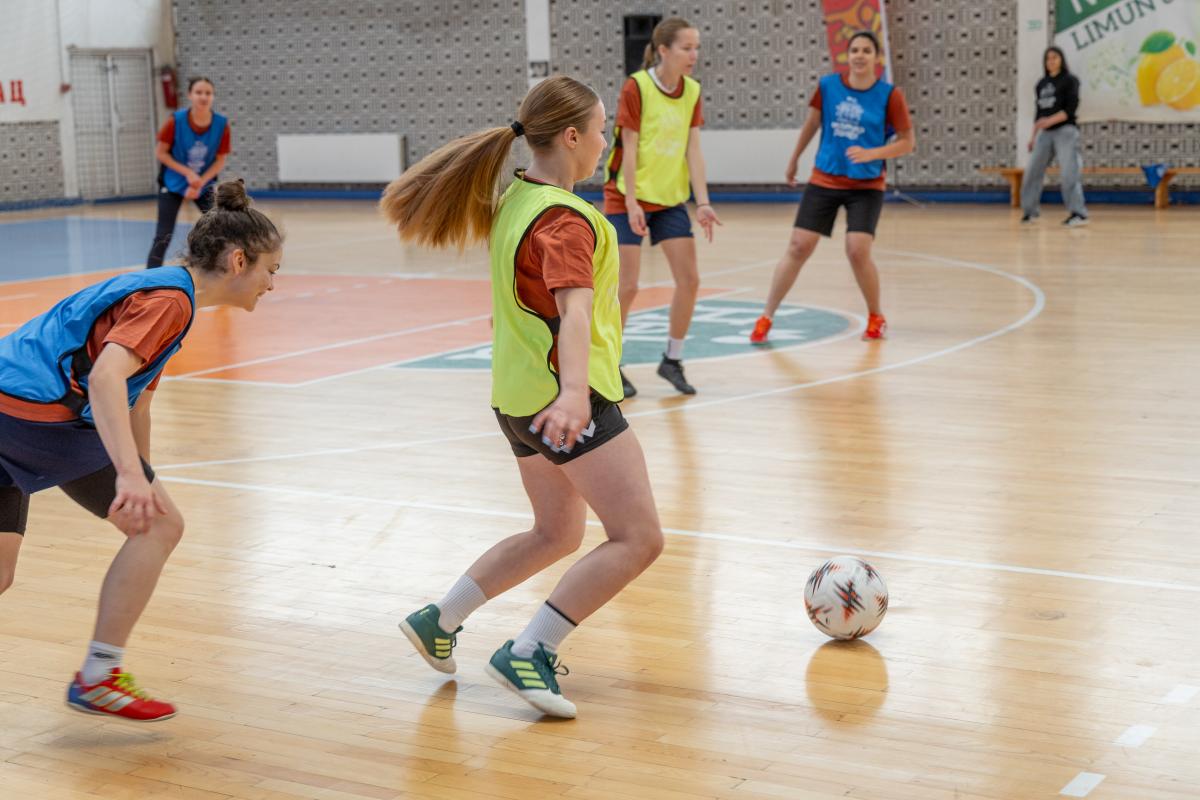
Photo: Dragan Spasov
When differences stop being barriers
Bujanovac is a multiethnic community where young people grow up surrounded by different languages, cultures, traditions and life experiences.
This diversity represents an important strength of the community. However, diversity alone does not automatically mean that everyone has sufficient opportunities to get to know one another, cooperate, and participate equally in shared activities.
This is why events like this matter. They create spaces where young people can build relationships through shared experiences, rather than learning about one another only indirectly, through assumptions or social stereotypes.
On the football pitch, players need to communicate, pay attention to one another, adapt to different playing styles and work together to resolve situations as they arise during a match.
What is particularly important, however, is that this cooperation does not have to end with the final whistle.
New friendships, mutual trust, and experiences of working together can lay the foundation for further connections among young people in schools, sports clubs, and the wider local community.
Social inclusion does not simply mean living alongside one another. It means having opportunities to get to know each other, cooperate, and collectively shape the spaces we live in.
This is precisely why the project “Strong alone, unstoppable together” brings together young people from different communities and creates opportunities for encounters that go beyond familiar social and group boundaries.
Conversations that do not begin in the classroom
Although football was the day's central activity, an equally important part of the event took place between matches, during socializing and informal conversations.
Young people raised questions about mental health, online safety and the importance of community support when facing difficulties.
These issues are deeply connected to their everyday lives, yet they are not always easy to talk about.
The pressure to fit in, expectations from peers and family, fear of judgment, online violence, violations of privacy, or the feeling that there is no one to turn to can significantly affect how young people perceive themselves and their surroundings.
This is why it is important to create spaces where these issues can be discussed openly, without stigma or predetermined answers.
Mental health is not solely an individual matter, just as online safety is not exclusively an individual's responsibility. How we treat one another, the support we receive, social norms, and the availability of appropriate services all shape how safe and accepted we feel.
Digital spaces are now an integral part of young people's lives. They offer opportunities for connection, learning, self-expression and activism, but they can also become environments where harassment, discrimination, blackmail, manipulation and different forms of violence occur.
It is particularly important to recognize that gender-based violence does not stop at the boundary between the physical and digital worlds. Controlling behavior, threats, privacy violations, and abuses of trust can continue or intensify through social media and digital communication.
Preventing violence therefore also involves developing digital literacy, understanding the right to privacy, recognizing situations that may pose risks and knowing where to seek support.
The conversations held during the tournament showed how valuable sporting events can be for creating accessible, relevant opportunities to discuss these issues with young people.
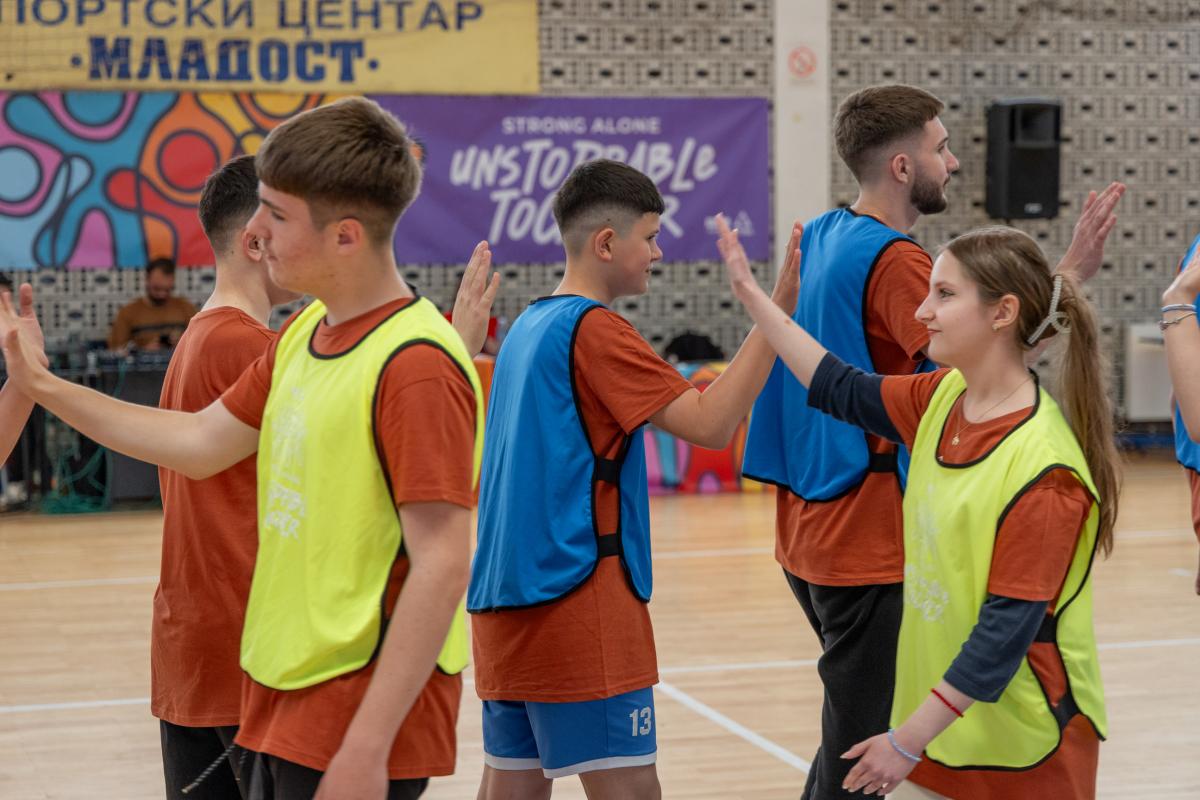
Photo: Dragan Spasov
Support that does not depend on the score
One memorable aspect of the tournament was the atmosphere in the stands and around the pitch.
Cheering, mutual encouragement, and respect accompanied the matches, regardless of which team was playing or the score.
In sport, where success is often measured by the number of goals scored, such an atmosphere reminds us of another important value: support does not have to be reserved for winners.
It matters especially when someone makes a mistake, feels uncertain, or needs encouragement to keep going.
And this is precisely where sporting experiences connect with broader questions of solidarity and violence prevention.
In communities where young people feel accepted, where they can talk about their problems and know they will not be mocked or rejected when they ask for help, important conditions are created for recognizing violence and seeking timely support.
These relationships do not develop on their own. They require time, trust and a willingness to see one another as equals, regardless of our differences.
This is why Atina believes sporting activities should focus not only on competition, but also on creating experiences of cooperation, support, and shared responsibility.
Sport for social justice begins with the question of who gets to participate
When we talk about sport as a space for social change, simply organizing a match and bringing young people together in one place is not enough.
We also need to consider who has access to sporting activities, who feels welcome, whose needs go unnoticed and which barriers must be removed to make participation genuinely equal.
For the young women and men who took part in the Bujanovac tournament, playing together was an opportunity to meet one another, cooperate and spend time in an environment where mutual respect and support were valued just as much as sporting results.
At the same time, conversations about mental health and digital safety highlighted young people's need for spaces where they can raise issues that extend beyond sport but directly affect their lives.
The project “Strong alone, unstoppable together - sport for social justice” brings these experiences together.
Its aim is not simply to encourage young people to participate in sporting activities, but to create opportunities for them to build relationships, challenge stereotypes, recognize discrimination and violence, and take a more active role in their communities.
The right to play, the right to equality, the right to safety, and the right to participation are not separate issues. They all speak to the kind of society we want to build and how willing we are to make room for everyone within it.
The football tournament was held on 17 May 2026 at the Mladost sports hall in Bujanovac, as part of the project “Strong alone, unstoppable together - sport for social justice”, implemented by NGO Atina with the support of the Swedish Postcode Lottery Foundation.




 FACEBOOK
 TWITTER
 YOUTUBE