Hotline: +381 61 63 84 071





Misdemeanors, stereotypes, and systemic silence: The position of women forced into prostitution in Serbia
Misdemeanors, stereotypes, and systemic silence: The position of women forced into prostitution in Serbia
On 22 January 2025, NGO Atina organized a round table “Prevention of sexual exploitation, trafficking in human beings, and prostitution in Serbia,” held at the premises of the Council of Europe in Belgrade. The event was organized with the support of the Permanent Mission of the Republic of France to the United Nations and other international organizations in Vienna and as part of the Serbian National program for Combating trafficking in human beings 2024–2026.
The round table aimed to open an expert discussion, through the exchange of experiences and analysis of practice, on the position of women forced into prostitution in Serbia, as well as on the need to consistently recognize them as victims of sexual exploitation and trafficking in human beings, rather than as women treated by the system as offenders.
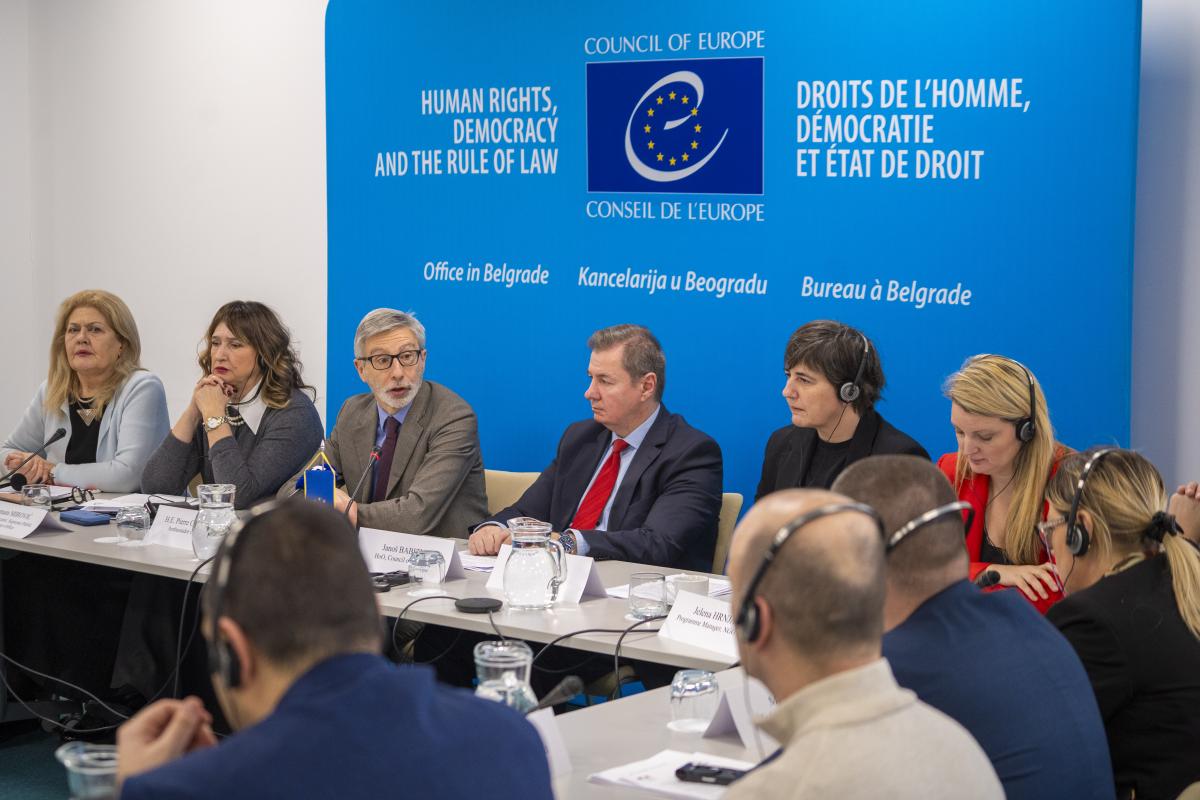
In the opening session, the speakers included Mr. Janoš Babić, Head of the Council of Europe Office in Belgrade; His Excellency Mr. Pierre Cochard, Ambassador of the Republic of France to Serbia; Ms. Tamara Mirović, Public Prosecutor at the Supreme Public Prosecutor’s Office; and Marijana Savić, director of the NGO Atina. In their addresses, they emphasized the importance of respecting international standards, institutional responsibility, and the role of civil society organizations in protecting human rights and combating trafficking in human beings.
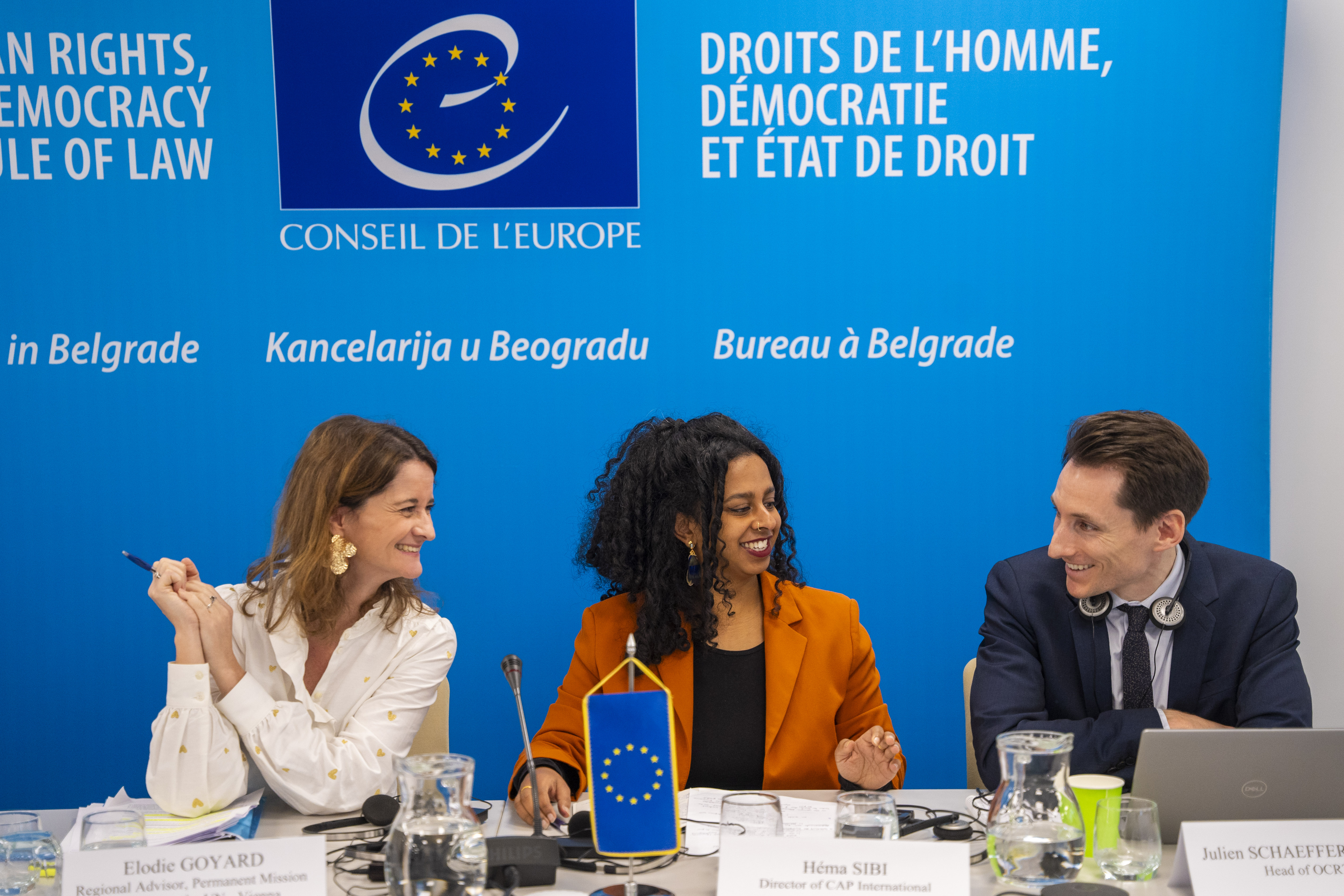
The first panel was dedicated to presenting the French abolitionist model, which is based on the decriminalization of women in prostitution, the criminalization of buyers of sexual services, and strong cooperation between the police, the judiciary, and civil society organizations. French representatives, Julien Schaeffer-Plumet, a police captain; Élodie Goyard, a prosecutor working on organized crime and human trafficking cases and a representative of the Permanent Mission of the Republic of France to the UN and other international organizations in Vienna; and Hema Sibi, director of the civil society coalition CAP International, which brings together organizations advocating for the abolitionist model, spoke about the crucial role of trust, psychosocial and legal support, and the importance of specialized services that enable women who wish to do so to exit prostitution.
The second panel focused on the Serbian legal and institutional framework, particularly the Law on Public Order and Peace and the criminal offense of “mediation into prostitution.” Participants highlighted that the existing legal framework results in women who are, in reality, victims of exploitation being punished through misdemeanor proceedings, while simultaneously being denied victim status and access to protection mechanisms. Particular criticism was directed at the frequent reclassification of the criminal offense of trafficking in human beings into the less serious offense of mediation into prostitution, which reduces the criminal accountability of perpetrators and deepens injustice toward victims. Examples from judicial and prosecutorial practice presented during the discussion illustrated how elements of coercion, control, debt, and abuse of vulnerability are often disregarded, while “consent” is wrongly interpreted as a genuine choice. One of the key messages of the discussion also concerned the need for systematic collection and publication of data, as well as for strengthening proactive investigations and international cooperation in cases of transnational sexual exploitation.
The discussion clearly demonstrated that the existing system more often punishes women than those who exploit them.
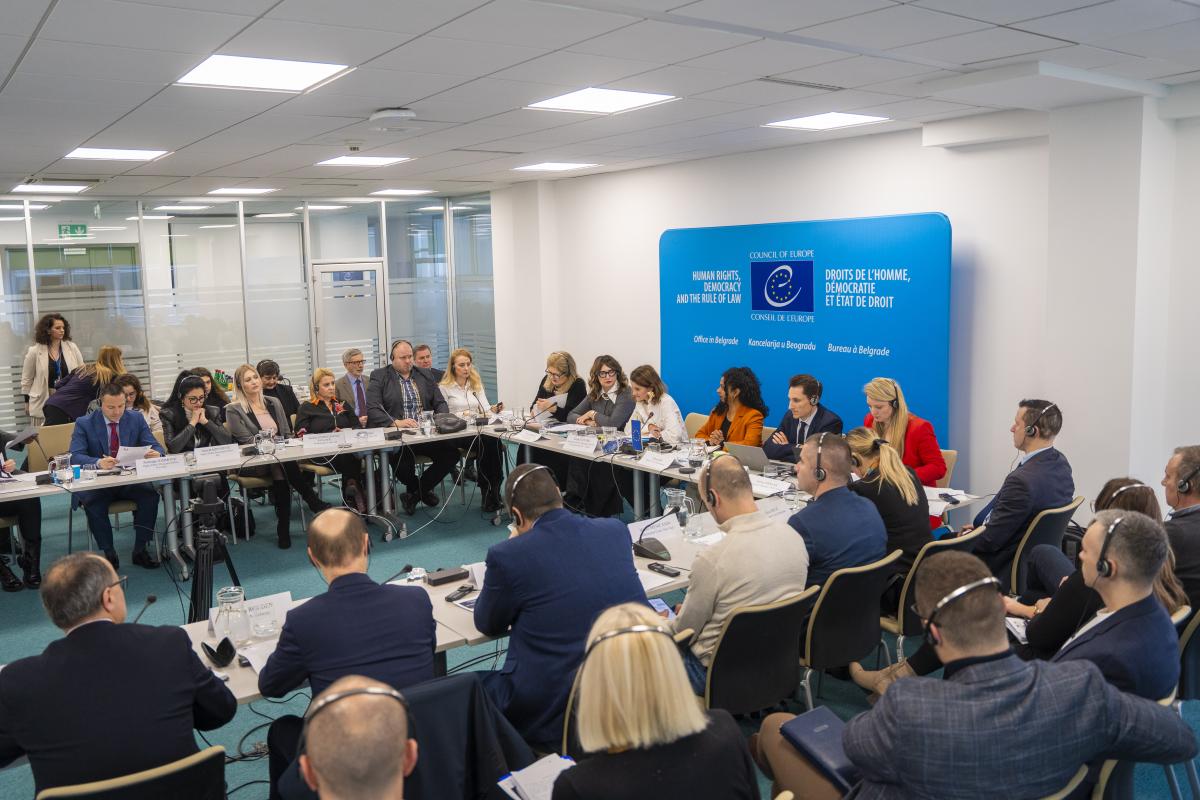
In the concluding part of the round table, Atina reiterated its clear position: the minimum necessary change is the decriminalization of women forced into prostitution and the consistent application of the principle of non-punishment of victims of trafficking in human beings. Without this, the system continues to produce secondary victimization and leaves a large number of women outside the scope of protection.
Clear conclusions and recommendations were formulated, pointing to the structural deficiencies of the current system. It was emphasized that women and girls forced into prostitution must not be punished, but instead recognized as victims of trafficking in human beings and gender-based violence. Particular attention was drawn to the harmful impact of Article 184 of the Criminal Code, which, in its current form, enables severe forms of exploitation to be reclassified into lesser criminal offenses, thereby reducing perpetrator accountability and denying victims complete protection. The need for the consistent application of the non-punishment principle was also stressed, so that criminal and misdemeanor proceedings do not further victimize persons who have already suffered exploitation.
Participants agreed that systemic and mandatory training for judges is necessary, especially in the areas of trafficking in human beings, gender-based violence, and the application of international standards, to overcome stereotypes that influence judicial practice. Particular emphasis was placed on strengthening cooperation between institutions and civil society organizations, following the French model, which demonstrates that without such cooperation, there can be no effective victim identification or sustainable support. It was also emphasized that without accurate, accessible, and comparable statistical data on cases, sanctions, and reclassifications, meaningful reforms are not possible.
In conclusion, it was underlined that the repeatedly invoked myth of prostitution as “the oldest profession” obscures the reality of organized exploitation, and that there is both an obligation and an opportunity to move women exploited in prostitution from a zone of blame into a zone of rights, dignity, and protection. The message of the round table was clear: sexual exploitation must not be accepted as a “normal” phenomenon, and women in prostitution must be shifted from a position of criminalization to one of rights, dignity, and protection.
Tagovi:



 FACEBOOK
 TWITTER
 YOUTUBE