Hotline: +381 61 63 84 071




Rights are more than words on paper: young people in Tutin discuss discrimination, solidarity and responsibility
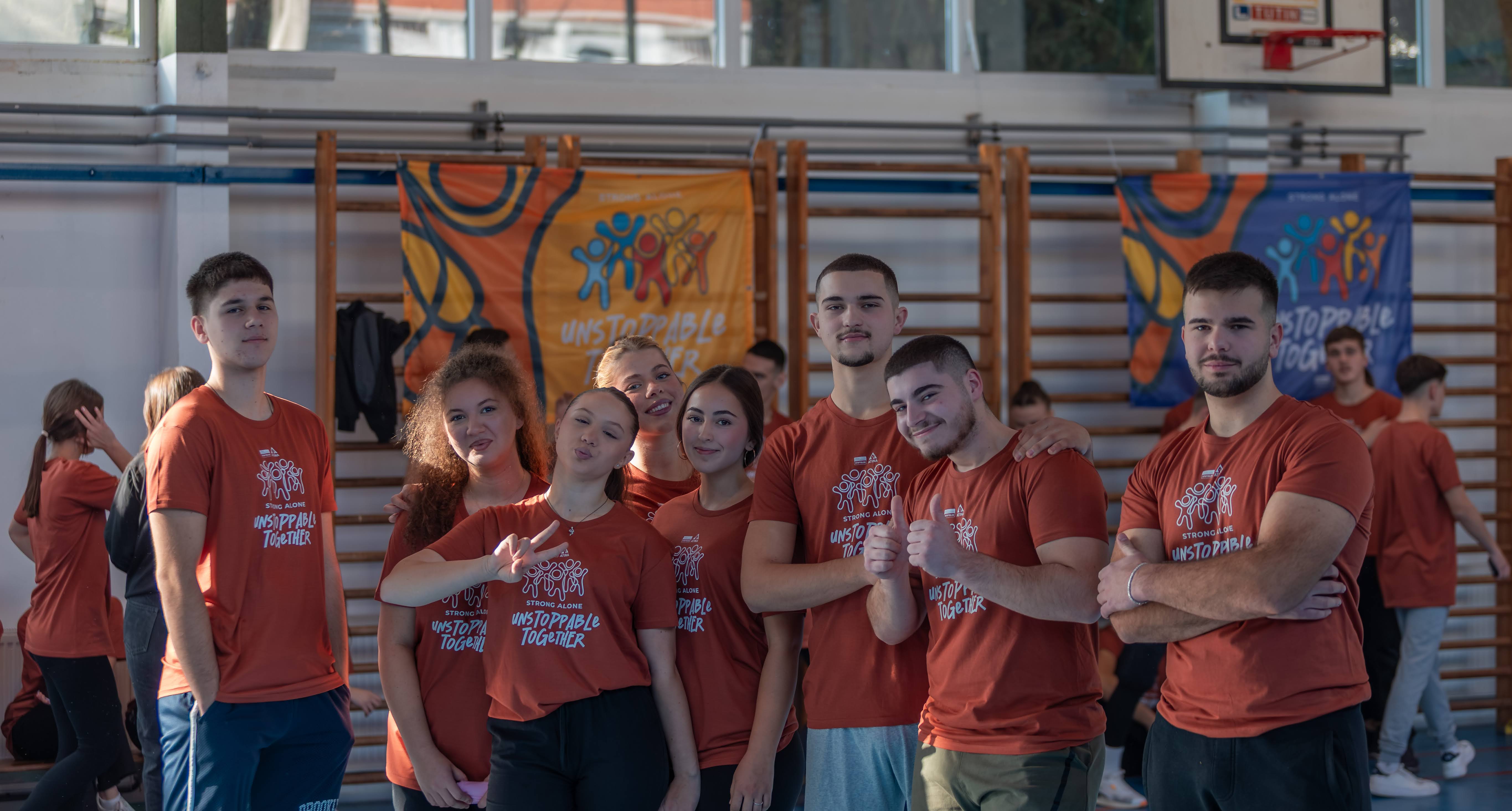
Photo: Tarik Zećirović
Rights are more than words on paper: young people in Tutin discuss discrimination, solidarity and responsibility
What does the right to equality really mean? How do we recognize discrimination when it doesn't take the form of open hostility, but instead appears as a joke, prejudice, exclusion, or the expectation that someone should remain silent? What can we do when we see someone's rights being violated?
These were some of the questions 38 young people explored during a two-day workshop for young leaders held in Tutin in November 2025, organized in cooperation between NGO Atina and the organization Svetionik.
Through interactive exercises, discussions on stereotypes and prejudice, an introduction to the legal framework protecting against discrimination and gender-based violence, and shared sporting activities, participants explored how to recognize, respect, and protect human rights in everyday life.
The workshop was organized as part of the project “Strong alone, unstoppable together - sport for social justice”, implemented by NGO Atina with the support of the Swedish Postcode Lottery Foundation.
When injustice becomes so familiar that we stop noticing it
Discrimination is not always open or easy to recognize. Sometimes it hides behind phrases we have heard so many times that we no longer question them. It can show up as expectations that girls and young women should behave a certain way, that boys and young men must never show weakness, or that someone has less right to participate or express an opinion because of their background, appearance, gender, or social status.
Such attitudes do not emerge overnight. People learn them, pass them on, and repeat them, often without considering the consequences for others.
That is why an important part of the workshop in Tutin focused on understanding stereotypes and prejudice: how they develop, why they persist, and how they can shape our relationships, decisions, and behavior toward others.
Through interactive exercises, participants could challenge established assumptions, discuss everyday situations, and reflect on where the boundaries lie between personal opinions, prejudice, and discriminatory behavior.
The first step toward challenging discrimination is recognizing it, even when society presents it as entirely normal.
However, recognizing injustice also raises further questions. Why do we sometimes remain silent when we see someone being humiliated or excluded? How much do peer pressure, fear of rejection, or the belief that nothing will change influence our reactions? And how can we offer support without putting the person we want to help at further risk?
These are precisely the questions that make the prevention of violence and discrimination much more than simply providing information.
Rights we do not know are difficult to defend
One particularly important part of the workshop focused on connecting everyday situations with the laws governing protection against discrimination and gender-based violence.
Through practical exercises, young people linked specific concepts to legal provisions. They explored how principles we often describe as social values also appear in the human rights protection system.
Why does this matter?
Because equality is not merely a desirable way for people to treat one another; it is a right. Protection against discrimination is not a matter of someone's goodwill. Protection from violence is not a privilege that anyone should have to earn. Respecting and fulfilling these rights also requires institutions to take responsibility.
Serbia has laws prohibiting discrimination and regulating protection against different forms of violence. However, having legislation and the genuine ability of every person to exercise their rights are not always the same.
Between rights written on paper and protection in everyday life, barriers often remain: lack of information, distrust of institutions, fear of the consequences of reporting, social stigma, or support mechanisms that are not sufficiently accessible.
This is why young people must not only learn what rights they have, but also understand what those rights mean, whom they can turn to when their rights are violated, and why responsibility for protection must not rest solely with the person who has experienced violence or discrimination.
This approach is particularly important in efforts to prevent human trafficking, as recognizing exploitation and abuse also depends on understanding rights, power relations, inequality, and the circumstances that may make certain individuals more vulnerable to risks.
Knowing our rights does not guarantee that they will always be respected. But it is an essential foundation for claiming and defending them, and for supporting others in exercising their rights.
Trust cannot be learned by heart
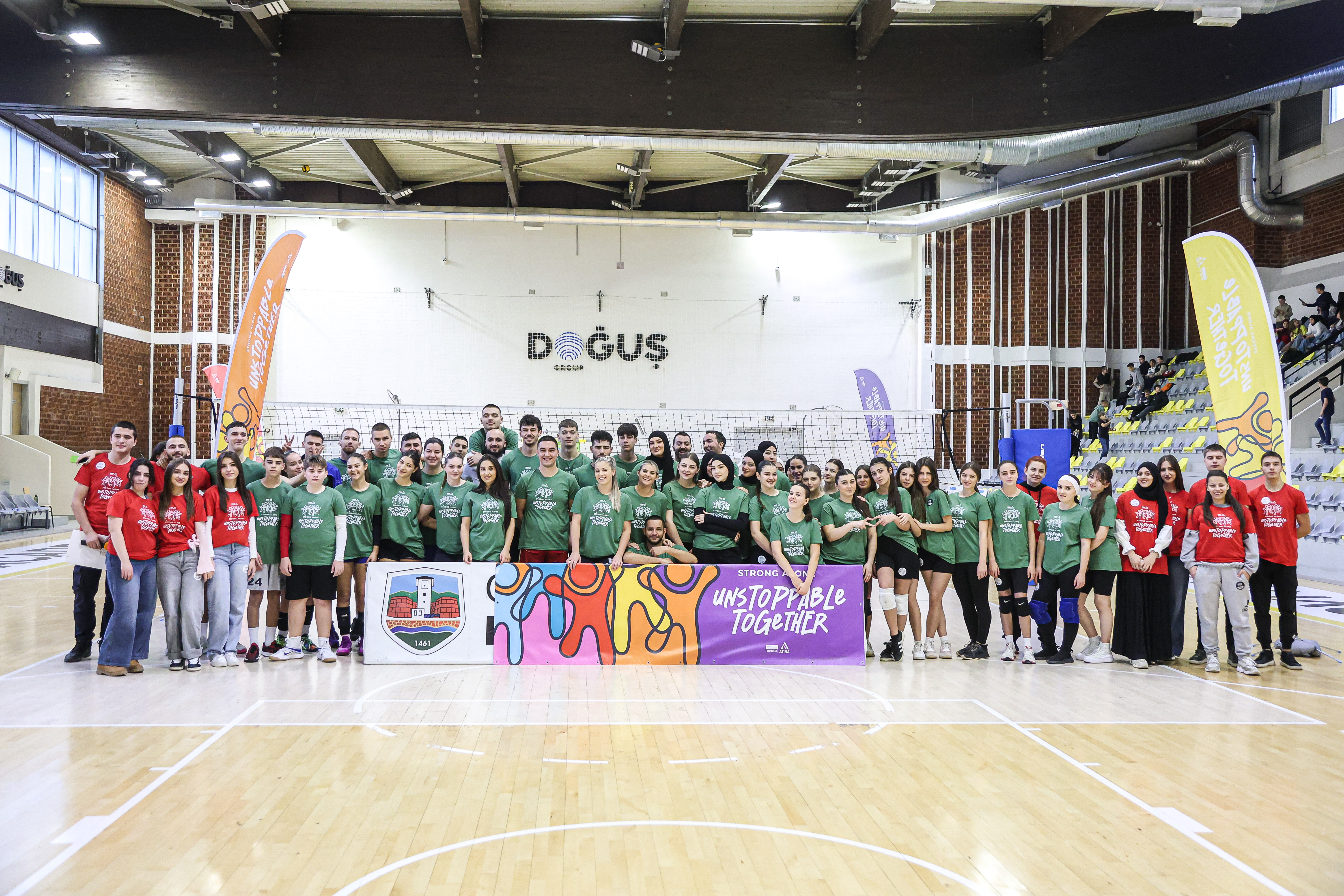
Another important part of the two-day program included sporting activities, giving young people the chance to connect the issues discussed during the workshop with shared experiences.
On the sports field, cooperation is not simply desirable. It becomes a necessity. Players need to rely on one another, respect agreed rules, recognize their teammates' needs, and accept that the collective result depends on everyone's contribution.
What makes sport particularly valuable when working with young people, however, is its ability to raise questions through play that matter just as much beyond the sports field.
How do we react when someone makes a mistake? Do we offer support or look for someone to blame? Does everyone have the opportunity to participate? How do we treat those with less experience or confidence? Is winning more important to us than ensuring that everyone has the chance to be part of the team?
These questions matter far beyond sport. They reflect the ways we build relationships at school, among peers and within our local communities.
This is why sport in Atina's program is not meant to replace discussions of serious social issues, but to offer an opportunity to explore certain values and relationships through direct experience.
Solidarity does not emerge simply because we talk about it. We build it through our actions, our willingness to offer support, take responsibility, and stand by others when they face difficulties.
“Together, we are learning not to turn a blind eye to problems”
One message shared during the workshop particularly captures its significance:
“Together, we are learning not to turn a blind eye to problems.”
These words convey an important message about our responsibility to one another.
When we discuss violence and discrimination, attention is often focused on the person who has experienced violence: whether they recognized what was happening, whether they sought help, and whether they reported it.
Much less frequently do we ask what those who witnessed the violence did, what support the community offered, and whether institutions responded appropriately.
Yet these questions are essential to understanding prevention.
Responsibility for stopping violence cannot rest solely with those experiencing it. It also belongs to institutions that have a duty to provide protection, as well as to communities that can help ensure violence is neither justified, normalized, nor met with silence.
For young people, this does not mean they should resolve dangerous situations themselves or take on institutions' responsibilities. Instead, they need to know how to respond safely, whom they can turn to, and how to offer support without exposing themselves or others to additional risks.
Learning not to disregard problems therefore also involves understanding the limits of our own responsibility, the importance of mutual support and the obligations of those responsible for taking action.
Change is built together with the local community
The workshop in Tutin was organized in cooperation with Svetionik, whose involvement helped connect project activities with the local community.
Local partnerships are particularly important when working with young people. They help ensure that activities are not treated as isolated events, but as part of a broader process of cooperation, knowledge exchange and creating opportunities for youth participation.
For Atina, programs aimed at preventing violence, discrimination and human trafficking must be connected to the real needs of communities, as well as to the organizations and individuals working within them.
Such an approach involves recognizing local experiences, planning together, and treating young people as equal participants in discussions about issues that directly affect their lives.
The two-day workshop in Tutin brought together different but interconnected elements: knowledge of rights, critical thinking, recognition of discrimination, mutual trust, and readiness to act collectively.
Legislation alone cannot create a society that respects human rights. It requires institutions that fulfill their obligations, communities that refuse to justify violence, and people who understand that injustice experienced by one person is not a problem that concerns only that individual.
Rights must be guaranteed by law. But for those rights to become a reality, we need to know them, demand that they be respected, and build communities where no one is left alone when their rights are threatened.
The workshop in Tutin was held in November 2025 in cooperation with Svetionik as part of the project “Strong alone, unstoppable together sport for social justice”, implemented by NGO Atina with support from the Swedish Postcode Lottery Foundation.




 FACEBOOK
 TWITTER
 YOUTUBE