Hotline: +381 61 63 84 071




The courage to speak, the willingness to listen: young people in Vranje discuss leadership and solidarity
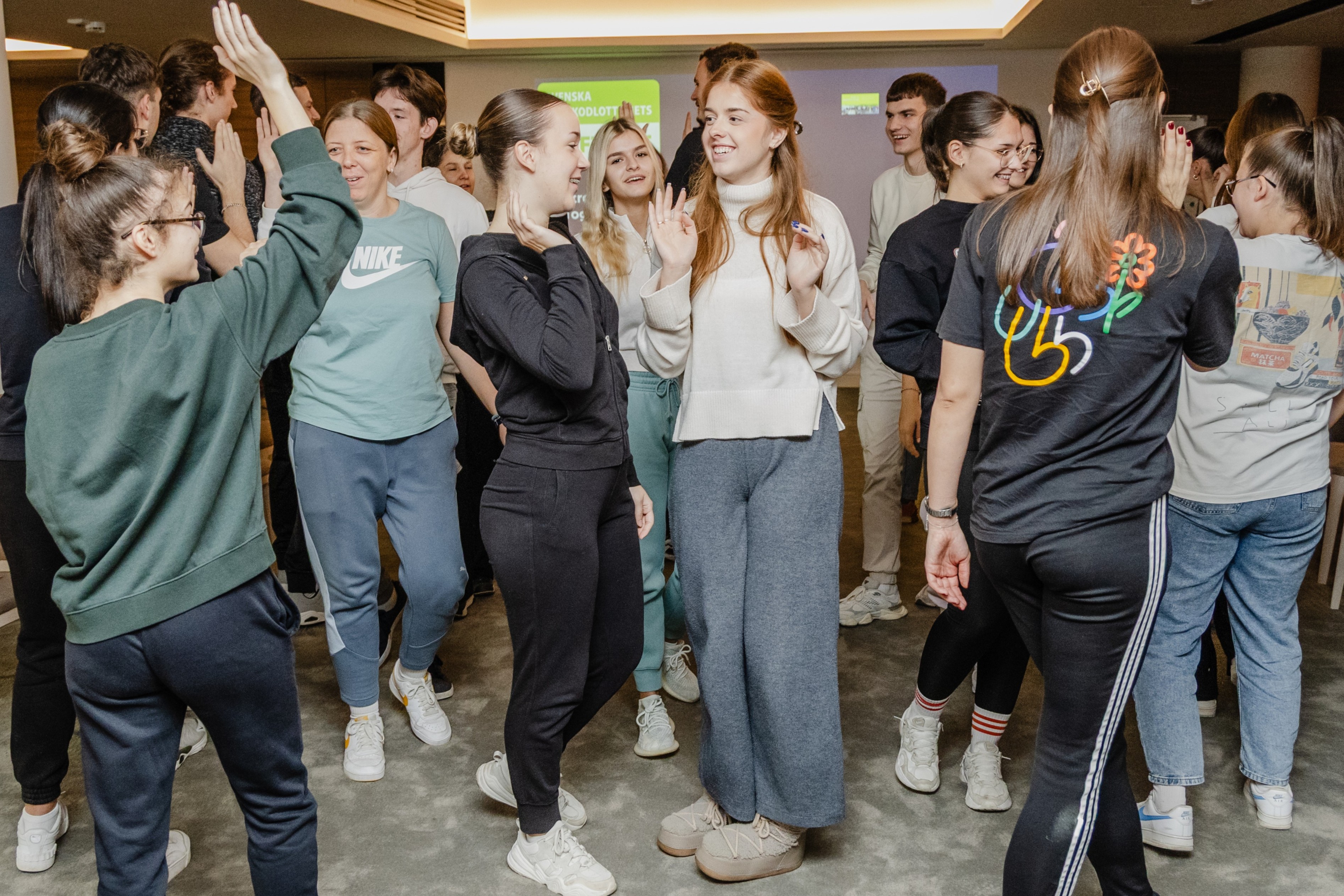
Photo: Dragan Spasov
The courage to speak, the willingness to listen: young people in Vranje discuss leadership and solidarity
Is leadership more about knowing how to speak or knowing how to listen? How willing are we to question our own views when we hear about experiences that differ from our own? And what changes when young people have a space where they can openly discuss injustice, discrimination and violence without fear of being judged for their opinions?
These questions were at the heart of a workshop for young leaders held in Vranje in November 2025, bringing together 21 young people. Through discussions, shared experiences, and sporting activities, participants explored how to develop critical thinking, empathy, mutual trust, and a willingness to take responsibility for the relationships we build with others.
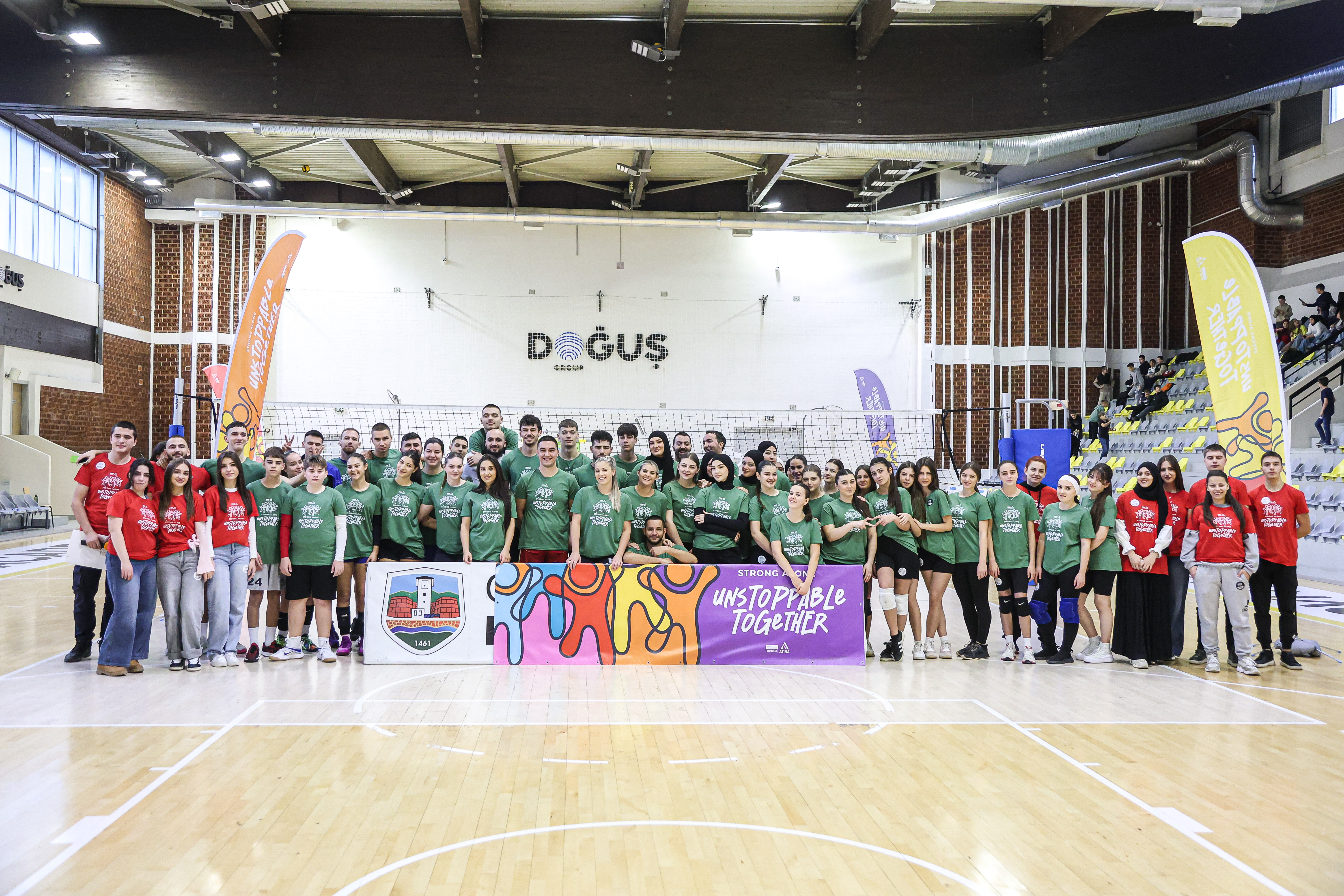
The workshop was organised as part of the project “Strong alone, unstoppable together - sport for social justice”, implemented by NGO Atina with the support of the Swedish Postcode Lottery Foundation.
Leadership does not mean always being right
When we talk about leadership, we often emphasise confidence, determination and the ability to guide others towards a common goal. Much less frequently do we discuss the qualities without which responsible leadership is impossible: the willingness to listen, understand a different perspective, admit that we do not know something or change our minds when there are good reasons to do so.
Yet these skills are particularly important when discussing complex social issues such as discrimination, gender inequality and violence.
During the workshop in Vranje, young people had the opportunity to exchange opinions, ask questions and challenge their own views on issues that directly affect their lives.
“I learn the most when I hear what others have to say,” said Sofija, one of the participants.
This simple statement carries an important message about learning that goes beyond memorising information.
When we listen to others, we do more than gain an opportunity to learn something new. We also have a chance to understand how different circumstances, experiences and social positions shape the way people perceive the world around them.
This does not mean that all opinions are equally justified or that discrimination and violence should be treated as matters of differing perspectives. On the contrary, respect for human rights must be the starting point of any discussion, not something open to negotiation.
Within that framework, however, there is considerable room for questions, uncertainties, exchanges of experience, and shared learning.
This is precisely the kind of space we seek to create through Atina's work with young people: a space where no one is expected to have all the answers immediately, but where everyone is encouraged to think, ask questions and listen.
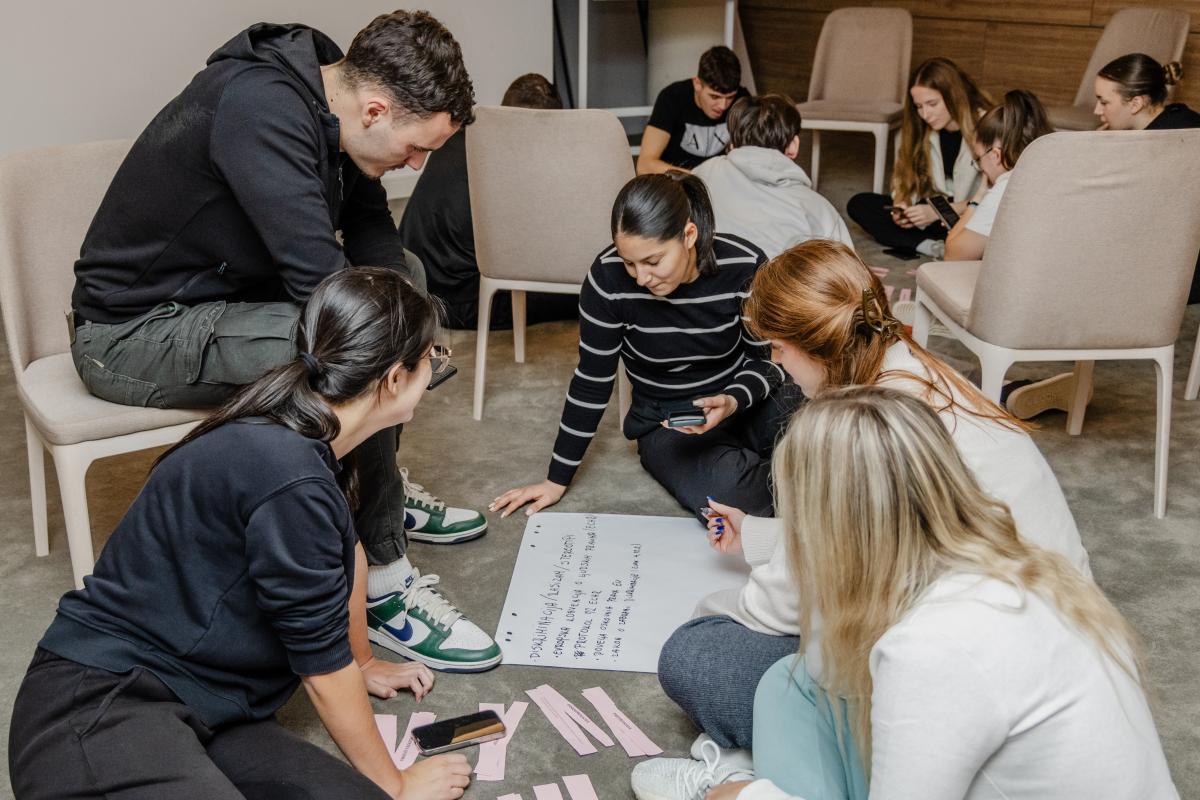
Photo: Dragan Spasov
When stereotypes stop being invisible
An important part of the workshop focused on recognizing stereotypes, discrimination, gender-based violence and human trafficking.
Young people often hear about these issues at school, in the media or on social networks. However, there is a significant difference between knowing what a concept means and understanding how it shows up in everyday life.
Stereotypes are not communicated only through openly discriminatory messages. They can also appear in expectations about how girls and boys should behave, comments about someone's appearance or background, assumptions about who can do certain activities, or the way someone's opinion is dismissed before it is even heard.
When such messages are repeated often enough, we risk accepting them as natural and unchangeable.
This is why participants used discussions and shared experiences to explore how these issues can be recognized at school, among peers, in their neighborhoods, and on social media.
It was important to create space to reflect on how prejudice develops, why certain behaviors become normalized, and what consequences they can have for those who experience them.
Recognizing a stereotype means questioning something we may have accepted without thinking for years.
But the process should not end there.
Understanding discrimination and violence also requires recognizing power relations, social expectations, and the barriers that may make it more difficult for some people to express their opinions, seek support, or exercise their rights.
For Atina, this connection is particularly important in efforts to prevent human trafficking and different forms of exploitation. Violence and exploitation do not occur in a social vacuum. Understanding them also requires discussing inequality, discrimination, abuses of trust and the circumstances that may expose certain individuals to greater risks.
Prevention therefore cannot be reduced to warning young people about dangers. It must also involve developing their ability to recognize injustice, understand their rights and know where to seek support.
Empathy is not the same as agreement
One important skill developed through workshops like this is empathy.
However, empathy does not mean that we have to agree with every opinion or consider every behavior justified.
It means being willing to try to understand another person's experience, even when it differs from our own.
This matters especially in discussions about violence and discrimination.
People who experience injustice often face additional scrutiny: why they didn't react, why they didn't seek help sooner, why they stayed in a particular situation, or why they didn't act the way others believe they should have.
Such questions can easily shift responsibility away from the person perpetrating violence and onto the person experiencing it.
This is why it is important to listen without rushing to judgment, avoid assuming we understand someone else's circumstances, and recognize how much support can mean to someone experiencing violence or exclusion.
This does not mean that young people should take on the role of professionals or try to resolve situations involving violence on their own. What matters is that they can recognize when support is needed, respond safely, and know whom to turn to.
Sometimes the first step towards offering support is simply being willing to listen and take what someone says seriously.
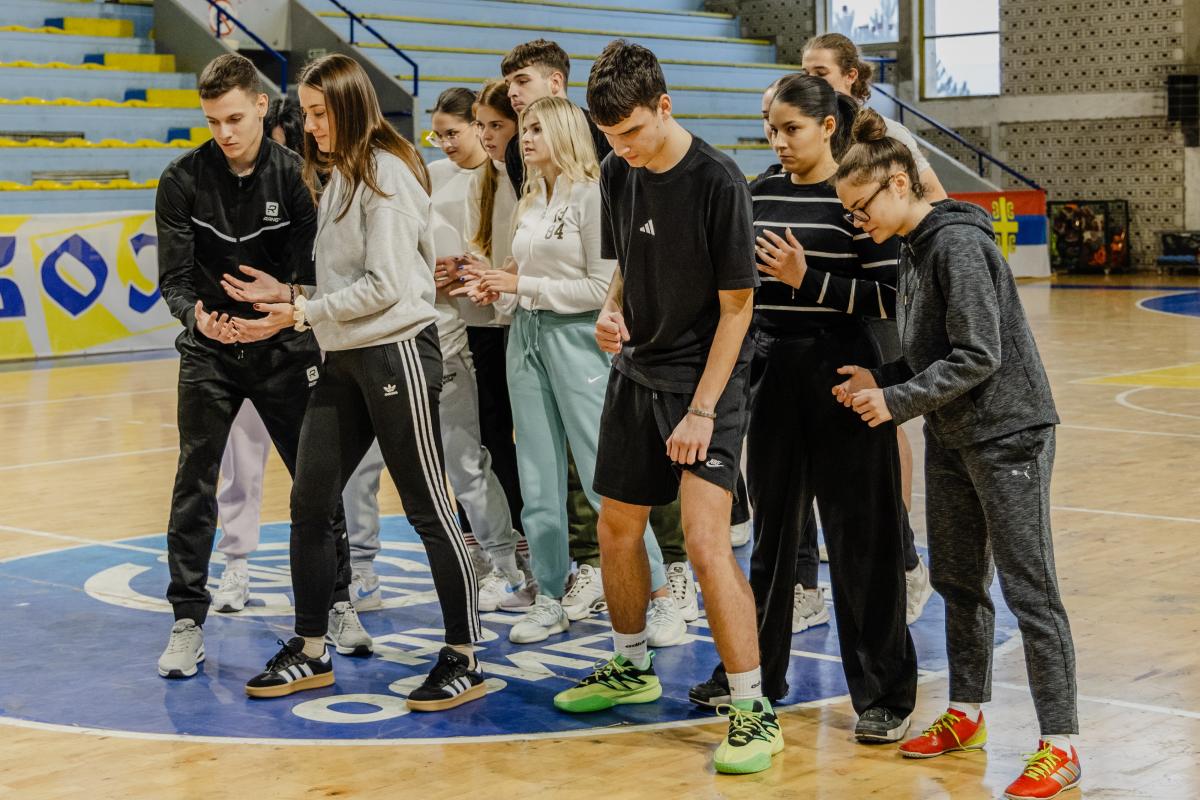
Photo: Dragan Spasov
Sport as an opportunity to put values into practice
Following the discussions and educational activities, the program continued with sport.
Through playing together, the values discussed earlier took on a different, more immediate form.
Respect, cooperation, fair play and solidarity are not simply concepts we can define. They show up in how we treat teammates and opponents, how we respond to mistakes, whether we respect agreed rules, and how willing we are to support others.
Helena, one of the workshop participants, recognized an important message in precisely this experience:
“Sport teaches us that we are strongest when we play fair and care for one another.”
Her words remind us that strength isn't measured by our ability to overpower others.
It can also be reflected in our willingness to cooperate, embrace differences, offer support, and recognize that collective success doesn't have to come at someone else's expense.
Of course, sport itself is not free from discrimination, gender stereotypes or violence. Exclusion, humiliation and unequal power relations can also exist on the sports field.
This is why how sporting activities are organized, which rules are established, and what values they encourage matters.
In the project “Strong alone, unstoppable together”, sport serves as a space to learn about and question relationships among young people, rather than simply as physical activity or competition.
Communities where different voices are heard
The workshop in Vranje was part of a broader process through which Atina connects non-formal education, sport and active youth participation in community life.
This approach aims not to have young people memorize a few definitions or adopt predetermined messages about social issues.
What matters more is that they develop the ability to ask questions, recognize injustice, understand different experiences, and help create environments where human rights are respected.
This requires spaces where young people can speak without fear of being belittled, as well as adults, institutions, and communities willing to listen to them seriously.
Sofija's and Helena's reflections highlight two important aspects of this process: the willingness to learn from one another and the understanding that togetherness involves care and responsibility.
In a society where loudness is often equated with strength and disagreement with hostility, remember that dialogue can also be a space for connection, learning, and change.
Leadership does not begin when we have all the answers. It can also begin when we ask a question, listen to another person, and decide not to remain indifferent to injustice.
The workshop for young leaders in Vranje was held in November 2025 as part of the project “Strong alone, unstoppable together - sport for social justice”, implemented by NGO Atina with the support of the Swedish Postcode Lottery Foundation.




 FACEBOOK
 TWITTER
 YOUTUBE