Hotline: +381 61 63 84 071



Social protection must not remain outside the dialogue: Atina at the Chapter 35 Working group conference
Social protection must not remain outside the dialogue: Atina at the Chapter 35 Working group conference
On Thursday, 13 November 2025, the annual conference of the Chapter 35 Working Group of the National Convention on the European Union, titled “Towards an Agreement”, was held at the Sava Center in Belgrade. The conference focused on current challenges and future perspectives for dialogue between Belgrade and Pristina to normalize relations. Chapter 35 has a specific position in Serbia’s EU accession negotiations, as it directly relates to Kosovo and the dialogue on the normalization of relations. The conference brought together representatives of civil society organizations, independent analysts, media representatives, and experts from Serbia, North Mitrovica, and Pristina, all of whom have been closely following this process and its impact on people's everyday lives.
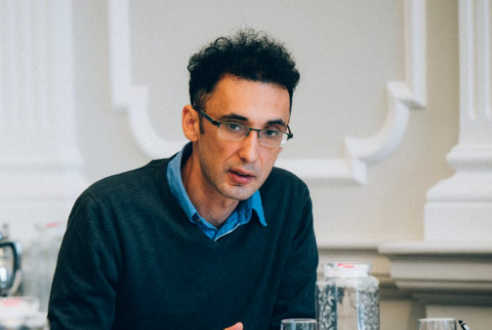
In the opening session, participants were addressed by Dragiša Mijačić, Coordinator of the Chapter 35 Working Group; Bojana Selaković, Coordinator of the National Convention on the European Union; and H.E. Kristin Melsom, Ambassador of the Kingdom of Norway to the Republic of Serbia. The conference featured three thematic panels: Does the Dialogue Have a Future -and Is There a Future in the Dialogue?, Dialogue in Election Years and Integration or Disintegration - The Future of Healthcare, Education, and Social Protection (Police and Judiciary). Milan Aleksić, representative of the NGO Atina, participated in the third panel.
In his intervention, Aleksić emphasized that social issues and the protection of vulnerable groups have been systematically neglected within the Brussels dialogue, despite their direct impact on people’s everyday lives, particularly women, children, and victims of human trafficking. As an example of good practice, he presented the project “BRIDGE - A Step Forward in the Protection of Women and Girls in Serbia and Kosovo, implemented by Atina in partnership with the organization PVPT from Pristina.
The project aims to strengthen the protection of victims of human trafficking and improve support for women and girls in a context where institutional cooperation mechanisms between authorities in Belgrade and Pristina are virtually non-existent, placing these groups in an even more vulnerable and high-risk position. The project demonstrates that cooperation in human rights protection is both possible and necessary, even in prolonged political deadlock.
Aleksić recalled that over more than fifteen years of dialogue in Brussels, no concrete agreement has been reached on social policy, nor have social issues been meaningfully addressed in the negotiations. Although the 2013 and 2015 agreements on the establishment of the Association/Community of Serb-majority Municipalities include competencies in education, healthcare, and social protection, these provisions have never been operationalized in practice.
On the contrary, the situation in social protection has further deteriorated in recent years, as the Centers for Social Work in Kosovo, which operated under the Serbian system, have been abolished without being replaced by adequate alternative protection mechanisms. As a result, socially vulnerable individuals, including victims of human trafficking and other at-risk groups, have been left without institutional support.
In this context, Aleksić stressed that social issues must become an integral part of the Brussels dialogue. That practical, depoliticized solutions must be found—solutions that do not interfere with status-related issues but ensure continuity of protection and support for those who depend on these services.
The discussion following the panel attracted significant audience interest. It confirmed a broad consensus on the need to recognize social protection, victims’ rights, and the protection of vulnerable groups as legitimate and urgent topics in the dialogue process.
Since 2023, the Atina Association has been a member of the Chapter 35 Working Group of the National Convention on the European Union. Through its participation, Atina contributes to monitoring the negotiation process from the perspectives of social protection, women’s rights, and the fight against human trafficking, as well as to developing recommendations that the National Convention submits to decision-makers in Serbia and to international stakeholders.



 FACEBOOK
 TWITTER
 YOUTUBE