Hotline: +381 61 63 84 071






When the law is not enough: Challenges and responsibility in protecting trafficking survivors
When the Law is not enough: Challenges and responsibility in protecting trafficking survivors
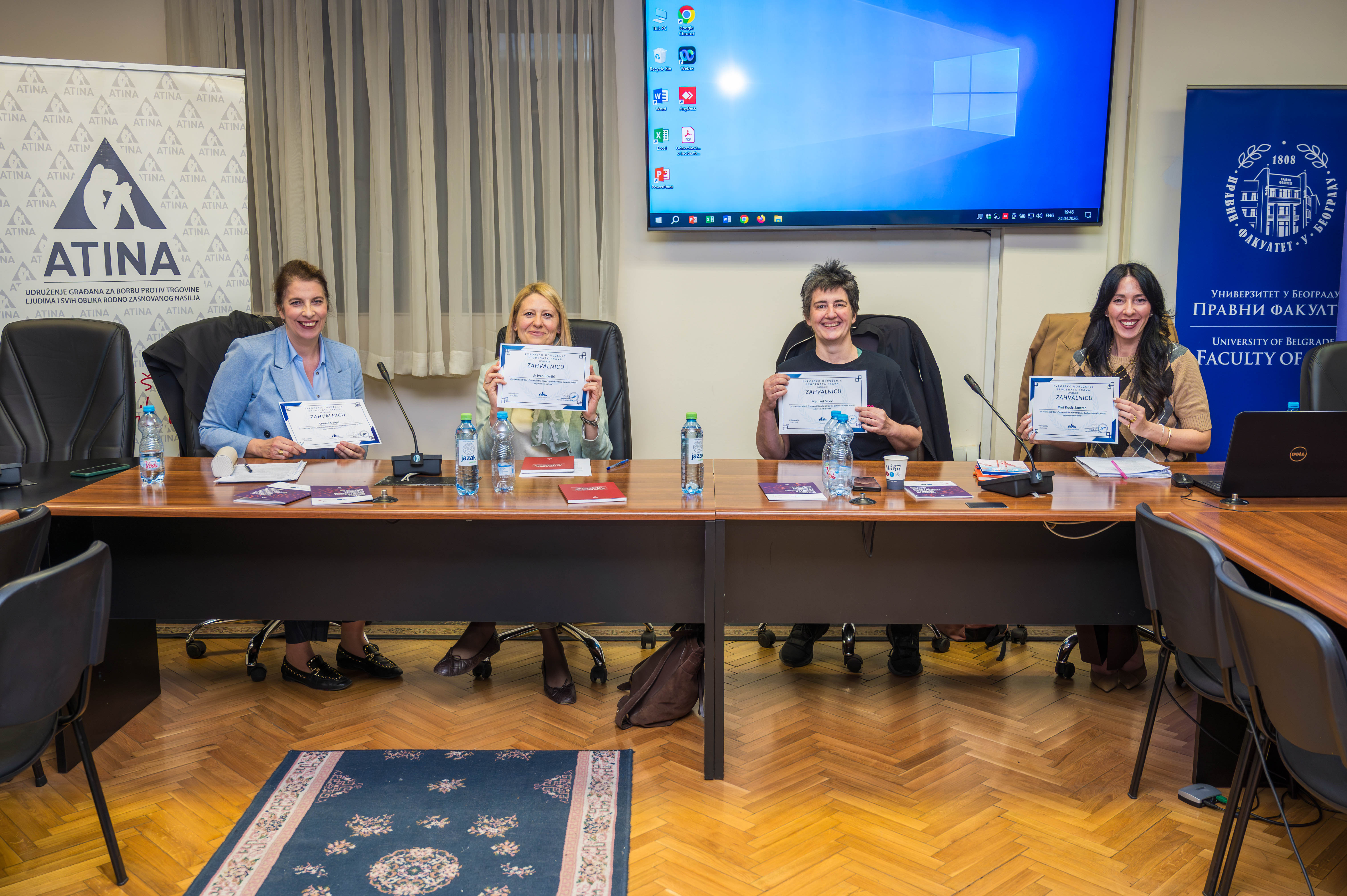
More than 60 students from the Faculty of Law, University of Belgrade, attended the panel discussion "Legal protection of trafficking survivors: Challenges in practice and system responsibility," which opened one of the most important questions for future legal professionals: how the Law actually functions when a victim seeks justice.
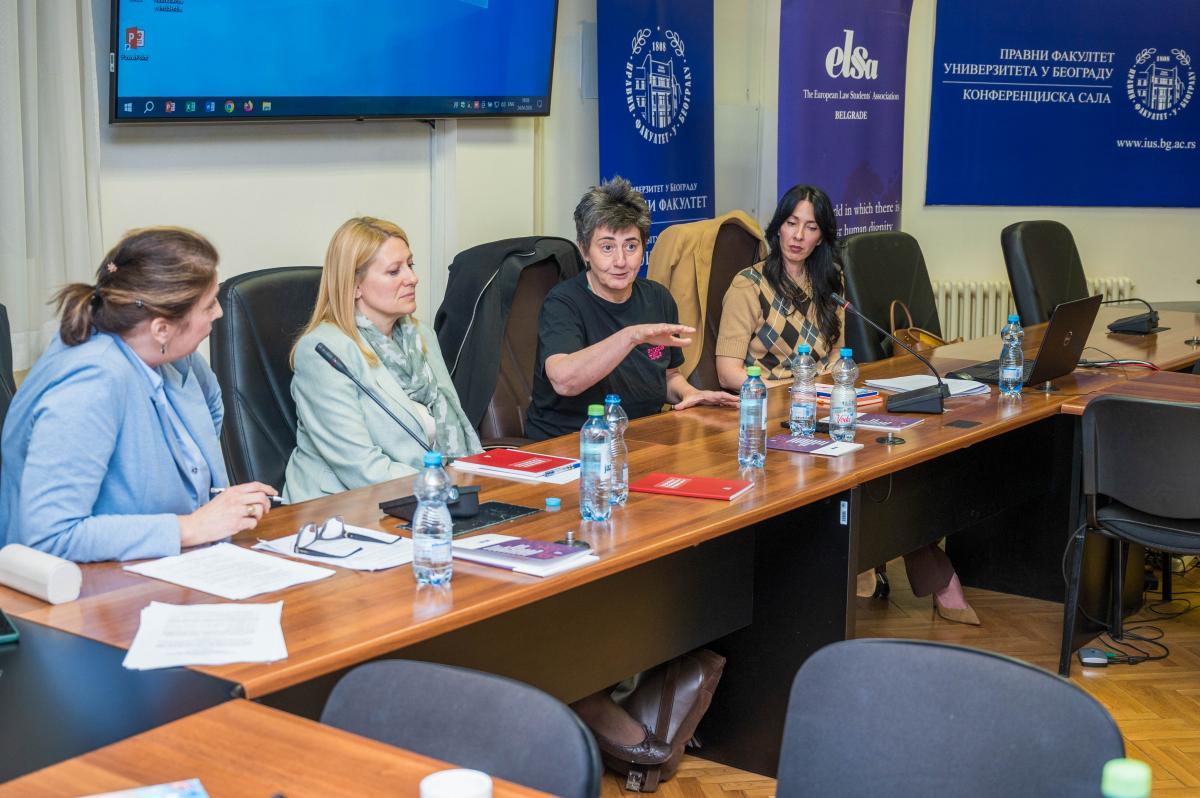
The event, held on 24 April 2026 at the Faculty of Law, was organized by NGO Atina and the European Law Students' Association (ELSA Belgrade), with the support of the Intesa Foundation, a philanthropic organization, within the project "Safe steps: Empowerment beyond survival - integrated support for victims of violence and human trafficking." The discussion was moderated by journalist Ljubica Gojgić, with contributions from Prof. Dr. Ivana Krstić, a full professor at the Faculty of Law; Dina Kocić Santrač, a criminal defense attorney from GS&M representing trafficking victims in criminal proceedings; and Marijana Savić, founder and director of NGO Atina.
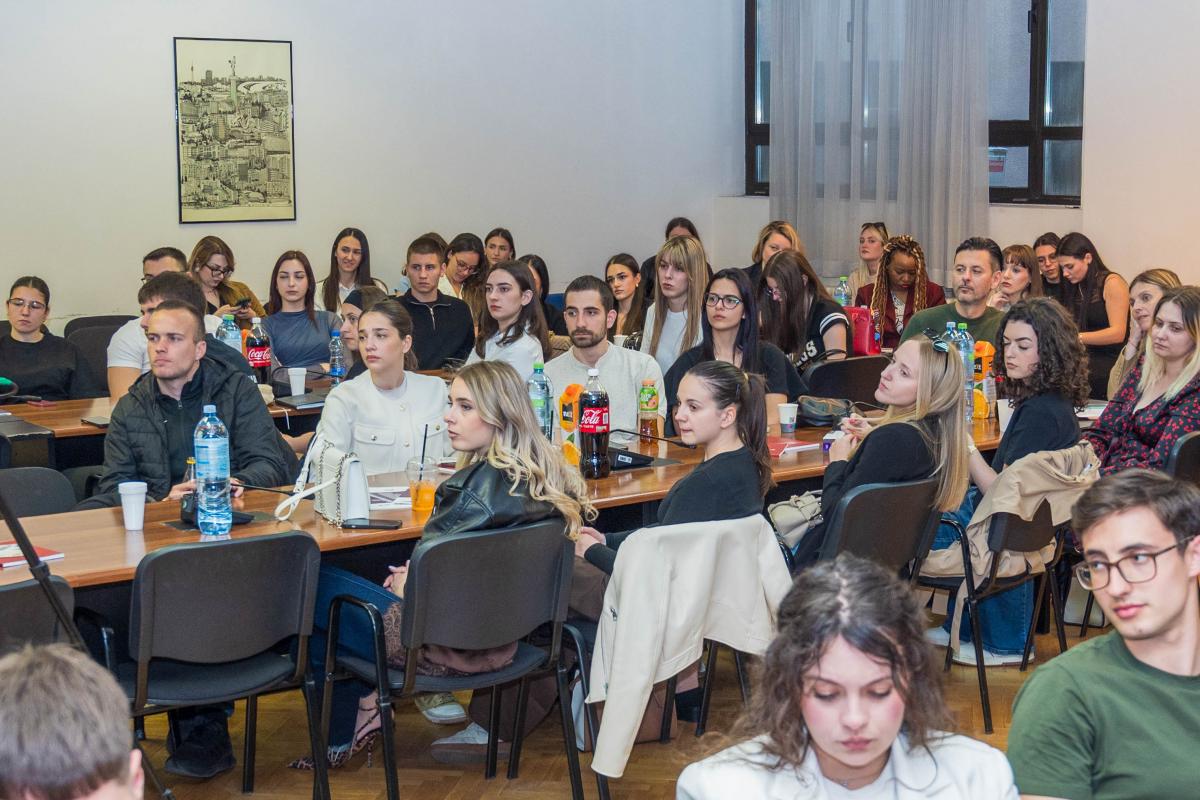
Law students confronted with the reality of the protection system.
Human trafficking remains one of the most serious violations of human rights, but also one of the most difficult crimes to prove and prosecute. Although Serbia formally has a developed legal framework, practice shows that the path to justice for victims is often long, exhausting, and uncertain. As highlighted during the discussion, the issue is not the lack of laws, but their implementation.
Speaking from years of direct work with victims, Marijana Savić pointed to the limited public understanding of trafficking itself. "Human trafficking is most often associated exclusively with sexual exploitation," she noted, "even though it includes forced labor, begging, criminal exploitation, and other forms of coercion and control." Yet only a small number of victims are identified in time and reach the system. "Only a small number of victims reach the system, while many cases remain invisible and therefore unprosecuted," she emphasized.
This invisibility directly shapes how the system is built, or fails to be built, around victims' needs. She stressed that the role of legal professionals is not only to apply the Law, but to improve it and ensure that victims are recognized and protected.
When the Law fails to protect, it causes further harm
Prof. Dr Ivana Krstić highlighted the key gap between legal norms and practice. "Formal regulations alone are not enough if they are not applied consistently and in the best interest of victims," she said.
The discussion emphasized that legal proceedings must go beyond delivering a verdict. "The goal of the process cannot be only a judgment, but a process that restores dignity, trust, and a sense of safety to the victim."
Reference was also made to a Constitutional Court decision from 2021, which exposed systemic failures, lengthy proceedings, re-victimization, and denial of the status of a particularly vulnerable witness, demonstrating that laws without implementation do not guarantee protection.
Working with victims in court: beyond standard legal practice
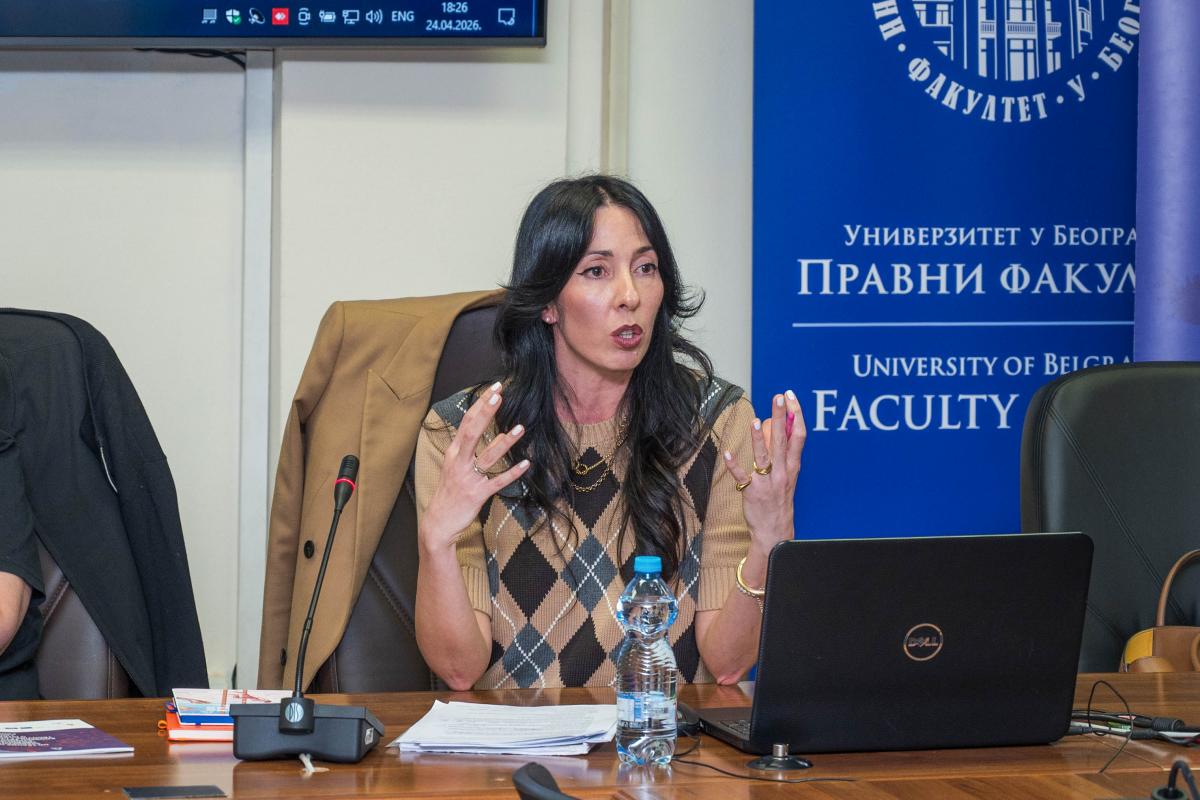
Attorney Dina Kocić Santrač addressed the realities of representing victims in court, stressing that these are not standard legal cases. "Representing victims of trafficking is not the same as representing a typical witness."
In practice, this means working with individuals who have experienced severe trauma and often have little trust in institutions. Building trust and demonstrating empathy is therefore the first step. "Victims often perceive lawyers as part of a system that has already failed them, which makes it essential to show understanding for what they have gone through."
She also pointed to lenient sentencing policies, evidentiary challenges, and lengthy proceedings that further exhaust victims. "When a process lasts for years, victims lose the strength and will to see it through."
She highlighted the lack of technical conditions in courts, including cases where video-link systems have not been functional for years, making it harder to protect vulnerable witnesses from confrontation with perpetrators. In practice, victims may even lose their status as particularly vulnerable witnesses and be required, years later, to testify in court in the presence of the accused.
Stereotypes that undermine justice
One of the most important parts of the discussion addressed harmful stereotypes still present within institutions. Questions such as "Why didn't you leave?", "Why didn't you tell anyone?", or "You could have left if you wanted to" not only fail to help, but directly deny victims' experiences and the very nature of trafficking, which is rooted in power, fear, manipulation, and dependency.
It was emphasized that legal professionals cannot adequately work in this field without understanding trauma psychology, the social context of violence, and ethical standards in working with victims.
A sentence that changes everything
Insights from conversations with survivors were also shared, particularly regarding their experiences with institutions. It was emphasized that the first contact with institutions often determines the course of the entire process.
One sentence from a survivor, spoken during a court hearing, resonated throughout the room: "I feel like no one believes me. I wish I had never come."
As highlighted, this sentence says more about the system than any statistic. It reflects a common experience: that instead of perpetrators being judged, victims often feel as though they are on trial.
Trust in institutions does not exist by default. It is built on communication, respect, and the system's willingness to provide meaningful support.
A new law adopted, but what will really change?
Part of the discussion focused on the newly adopted Law on the Prevention and Suppression of Human Trafficking and Protection of Victims. While it represents an important institutional step, it was clearly stated that Serbia's main challenge is not the lack of regulation, but its implementation.
The Law introduces clearer coordination and responsibilities among actors. Still, its real impact will depend on how it is applied in practice by the police, prosecution, courts, social welfare centers, and civil society organizations.
Concerns were also raised about the reclassification of criminal offenses, where trafficking cases are often reduced to lesser offenses such as facilitating prostitution, resulting in victims losing their status and protection.
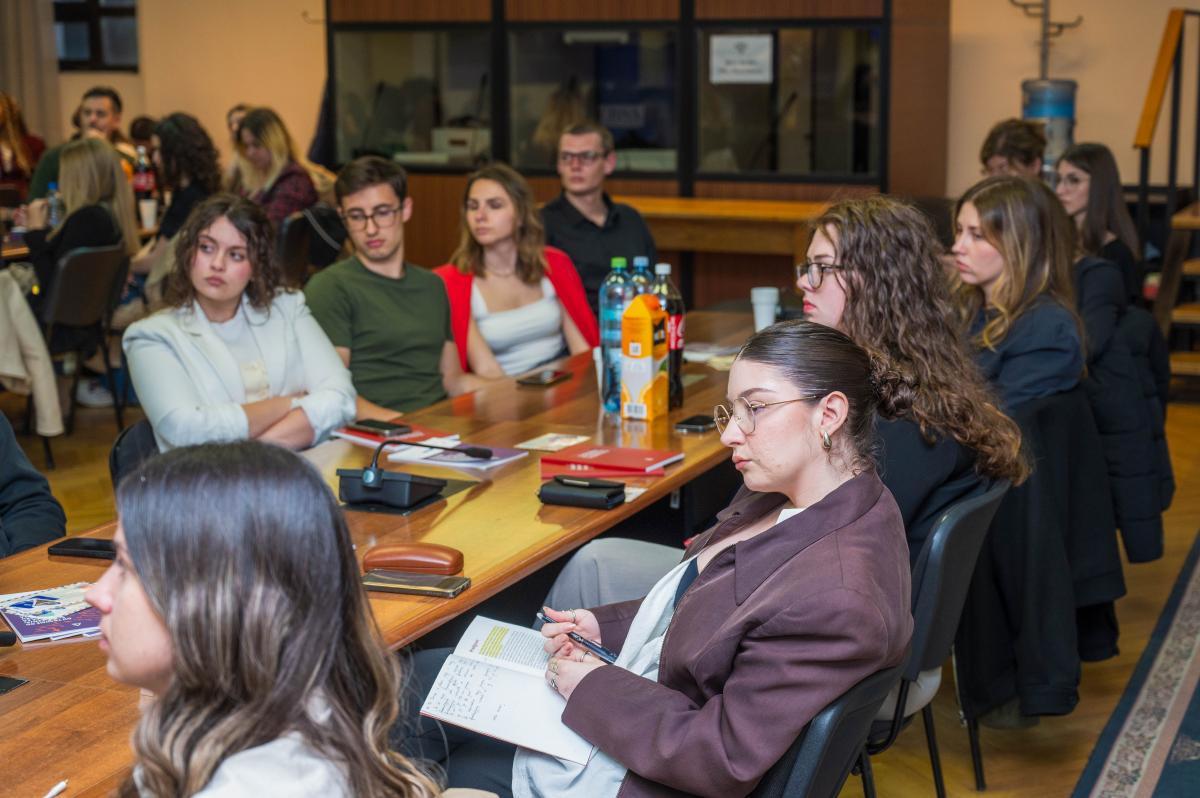
Students as future actors of the system
The panel was not only an exchange of experience, but an opportunity for future legal professionals to confront the reality of the system they are entering.
More than 60 students actively participated, raising questions that directly shape the future of the justice system: what pressures do courts face in trafficking cases, how many cases remain unrecognized, what messages are sent by laws that sanction victims, and what is the role of the family in these cases?
These questions did not remain unanswered, but they opened even deeper dilemmas about the responsibility of future professionals.
A responsibility yet to be fulfilled
The discussion made one thing clear: the Law is not a neutral tool. It can protect, but it can also harm.
The final message was simple, yet powerful: the system will not improve on its own. It will be changed by those who enter it.
For the more than 60 students present that day, this is no longer a theoretical question. It is a question of their future profession.



 FACEBOOK
 TWITTER
 YOUTUBE