Hotline: +381 61 63 84 071




Recognising violence is the first step. Understanding the person is what makes the difference.
Recognising violence is the first step. Understanding the person is what makes the difference.
Photo made by: Andrèj Veličković
How can we recognise human trafficking when exploitation is not immediately apparent? How can we speak with someone who has survived trafficking without causing further harm? And how can we ensure that different institutions and organisations truly work together in the best interests of the person who needs support?
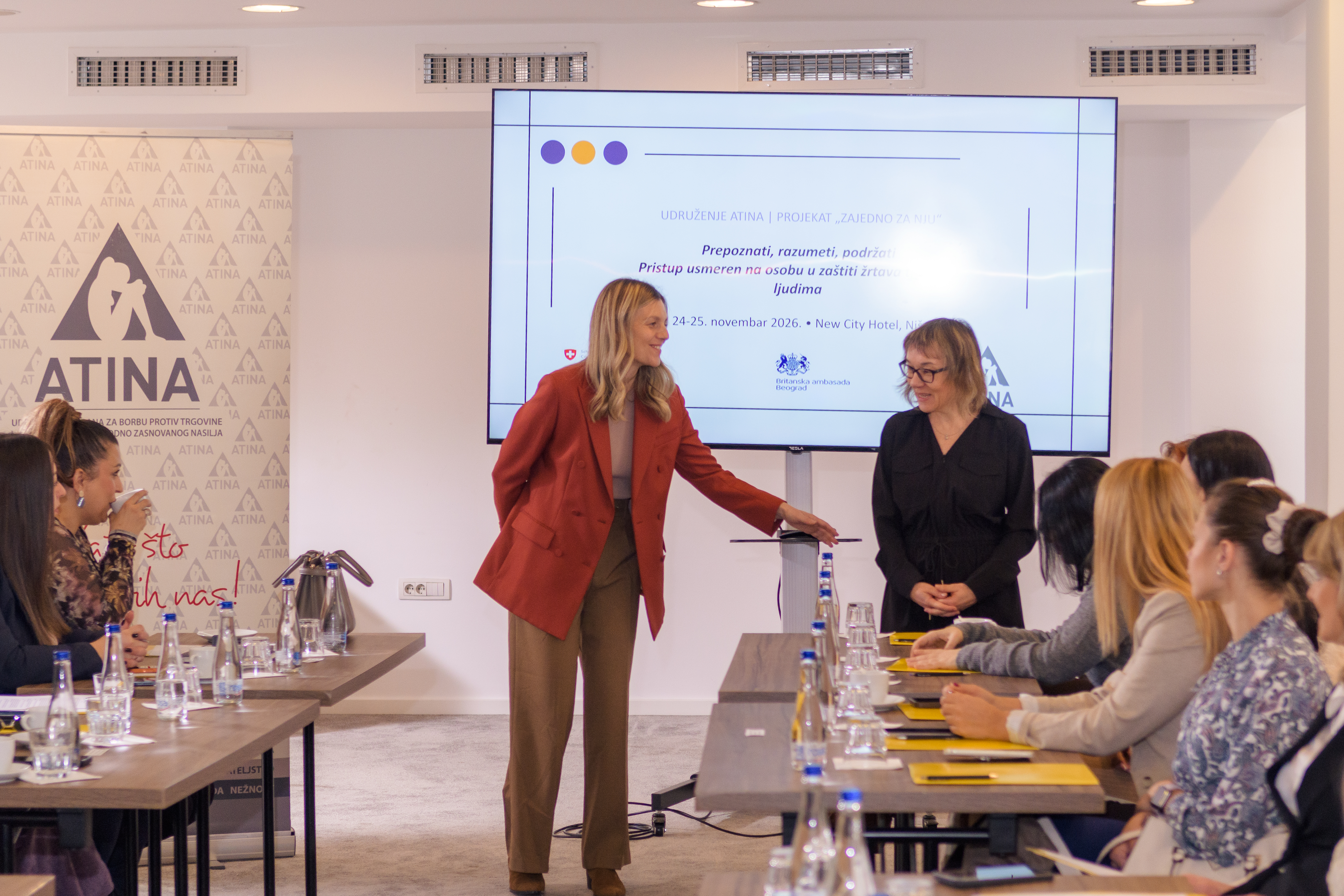
These questions were at the heart of the two-day training, “Recognise, Understand, Support: A Person-Centred Approach to the Protection of Victims of Human Trafficking”, organised by NGO Atina on 24-25 November 2026 in Niš.
The training brought together 29 professionals from Centres for Social Work in Ražanj, Bojnik, Niš and Pirot, the Duško Radović Home for Children and Young People in Niš, the Niš Safe House, the Roma Women's Association Osvit, the Mara Centre and the Shelter for Adults.
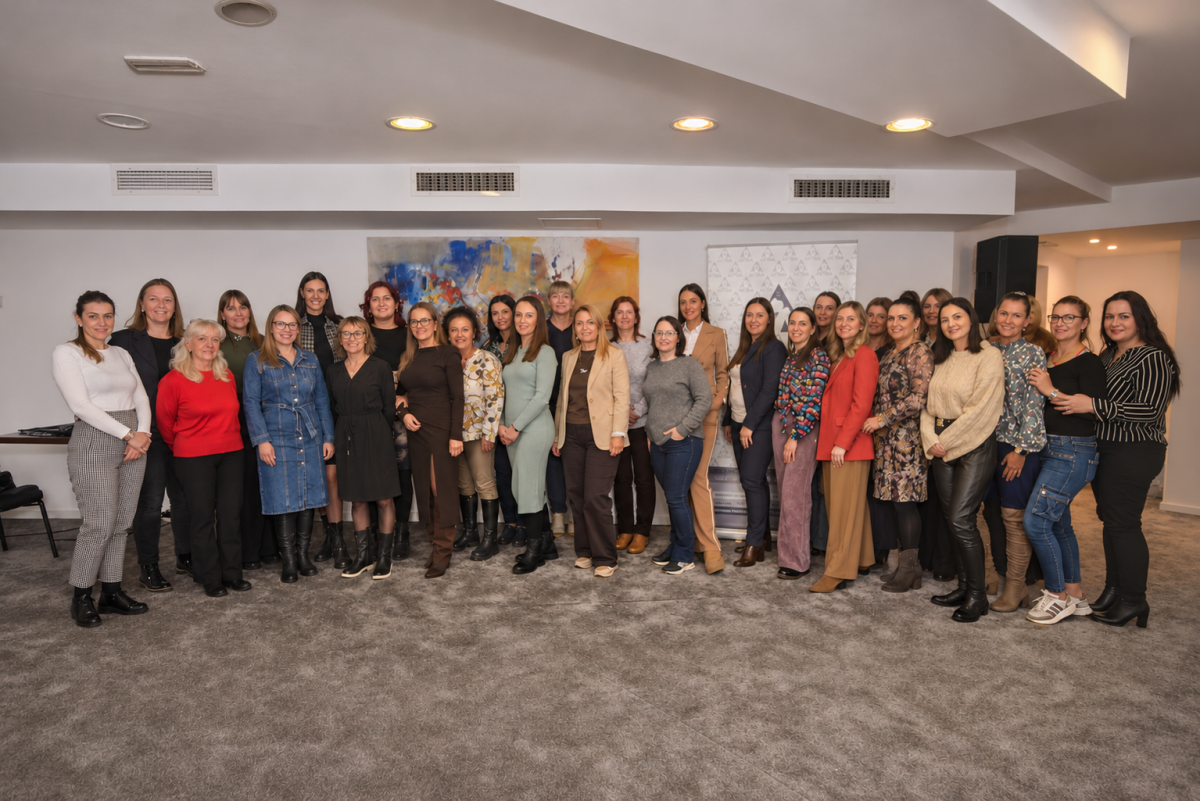
The participants' diverse professional backgrounds created space to discuss the challenges they face in their everyday work, as well as how to ensure that protection for survivors of human trafficking is timely, accessible and responsive to their actual needs.
A person is so much more than the violence and exploitation they have experienced. This principle lies at the heart of Atina's work and was a key message throughout the training.
Recognising what is not always visible
During the first day, we explored contemporary forms of human trafficking, particularly those that are difficult to recognise. Drawing on real-life examples, we discussed how relationships of dependency, manipulation, fear and different mechanisms of control can prevent people from recognising exploitation or seeking help.
Particular attention was given to communicating with potential victims of human trafficking: how to build trust, ask questions without causing further trauma, and identify needs and risks while respecting each person's dignity, autonomy and right to make decisions about their own life.
On the second day, the focus shifted to understanding trauma and strengthening cooperation across sectors. We discussed how trauma affects memory, behaviour, emotional responses and decision-making, and why silence, withdrawal, mistrust or changes in testimony should not automatically be interpreted as an unwillingness to cooperate or as signs that a person is unreliable.
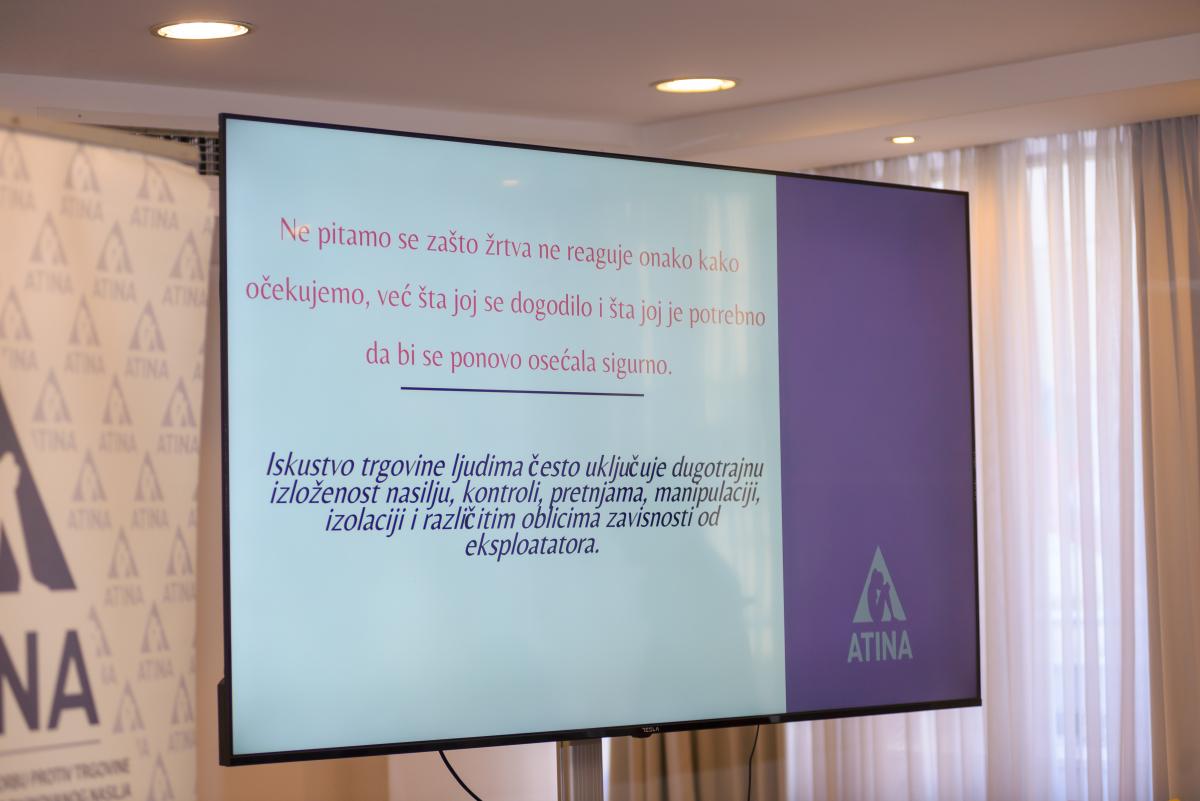
Through case studies, we also explored cooperation between Centres for Social Work, prosecutors' offices and specialised support organisations, particularly in situations requiring joint risk assessments, protection of victims' rights and practical solutions to challenges that arise between different services.
The training was facilitated by Dragana Ćuk Milankov, clinical psychologist and Head of Atina's Counselling Centre for the Recovery of Trafficking Survivors, and Lidija Đorđević, Direct Support Programme Coordinator at NGO Atina. Irena Radivojević, Public Prosecutor at the Higher Public Prosecutor's Office in Niš, and Marija Milošević from the Centre for Social Work in Pirot made valuable contributions to the session on intersectoral cooperation, sharing their experiences and discussing the challenges of putting protection measures into practice.
Support must not get lost between institutions
For Atina, trainings like this are about much more than sharing knowledge. They create opportunities for professionals to question established practices, better understand one another's roles, and work together to bring support closer to the people who need it.
Protection must never depend on whether a person is ready to report violence or cooperate with the authorities. Support must be accessible, continuous and built on trust, while each person's right to make decisions about their own life must remain at the centre of every intervention.
We would like to thank all participants for their openness, for sharing their experiences and for their willingness to reflect together on how to make the protection system more accountable, better connected and more responsive to the needs of people who have survived human trafficking.
The training was organised as part of the “Together for Her” project, with the support of the Swiss State Secretariat for Migration (SEM).



 FACEBOOK
 TWITTER
 YOUTUBE