Hotline: +381 61 63 84 071




Women survivors’ voices in policymaking: Ninth Community of Practice held in Belgrade
Women survivors’ voices in policymaking: Ninth Community of Practice held in Belgrade
Photo made by: Dragan Mujan
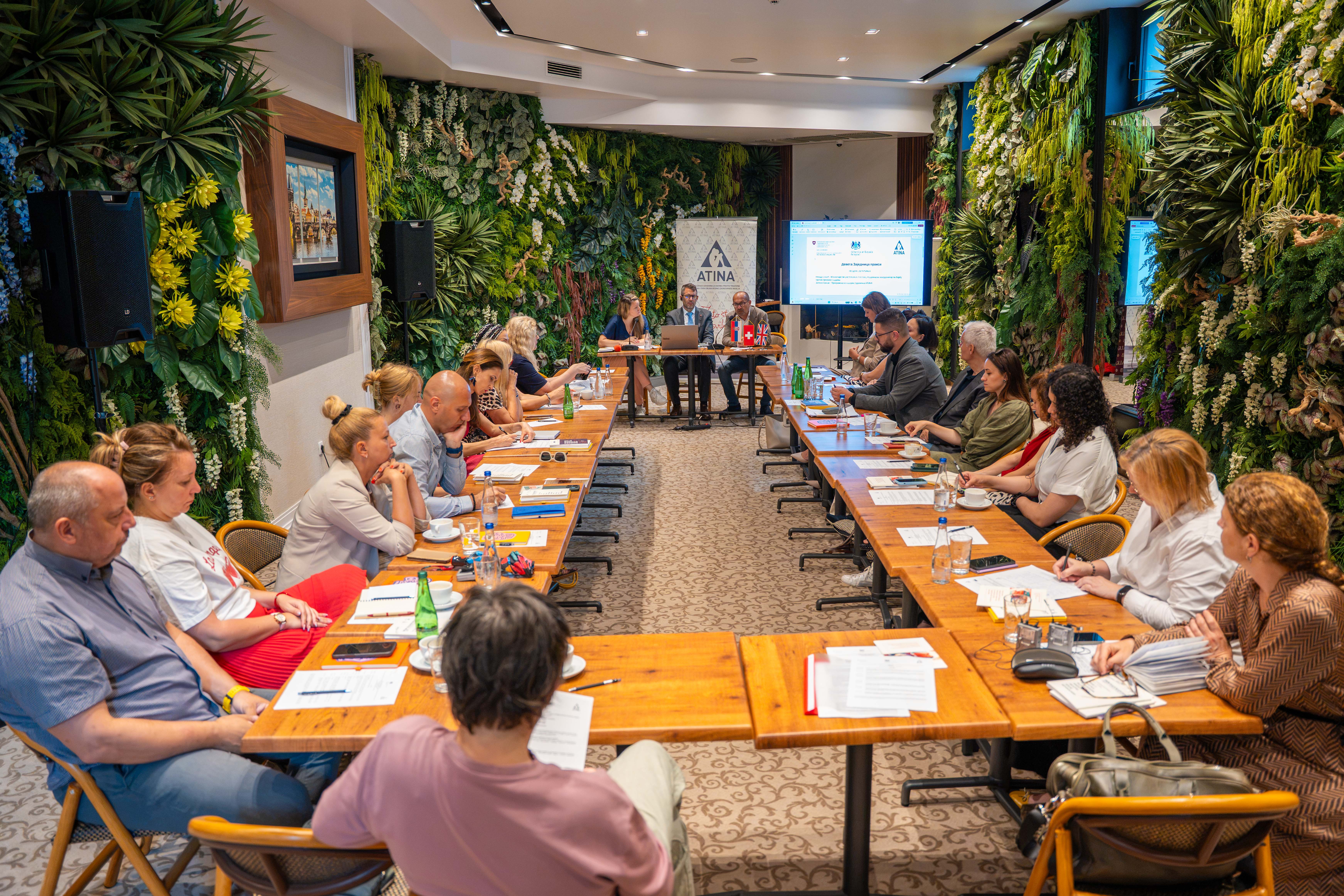
How can the experiences of trafficking survivors be translated into concrete systemic change, and how can we ensure that their voices are part of shaping the policies and services that directly affect them? This question was at the heart of the Ninth Community of Practice, organised by NGO Atina on 2 July 2026 in Belgrade under the title “From recommendations to policies: towards the priorities of the new Action Plan for combating trafficking in human beings for 2027-2029”.
The Ninth Community of Practice brought together nearly 30 representatives of institutions, international organisations and civil society organisations that play an important role in preventing trafficking in human beings, recognising and identifying victims, providing protection, support, recovery and reintegration, as well as prosecuting perpetrators of trafficking. Participants included representatives of the Ministry of Interior, the Commissariat for Refugees and Migration of the Republic of Serbia, the Centre for Human Trafficking Victims’ Protection, social welfare centres, the judiciary, international organisations and civil society organisations.
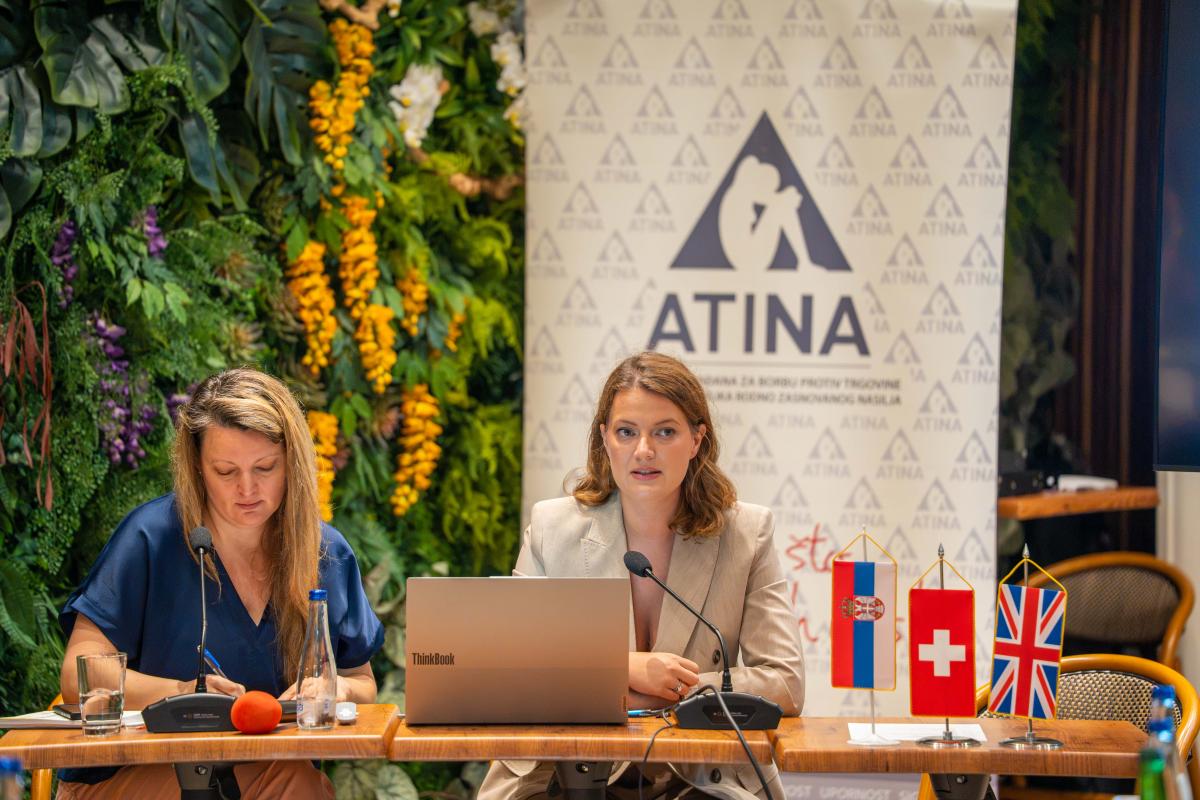
At the opening of the event, participants were welcomed by the Embassy of Switzerland representative in Serbia, Nenad Simić, National Anti-Trafficking Coordinator at the Ministry of Interior, and Jelena Hrnjak, Programme Manager at NGO Atina.
Survivors’ voices as part of policymaking
The first part of the meeting addressed an important question for further improving the system: how to ensure that trafficking survivors are actively involved in shaping public policies and services that directly affect them, and that their experiences and proposals are taken into account in decision-making.
Andrijana Radoičić Nedeljković from NGO Atina presented a proposal for a participatory mechanism for the systematic collection, analysis and use of feedback from people with lived experience of exploitation and trafficking. The idea is for survivors’ experiences to become an important source of knowledge for improving legislation, strategic documents, services and the way the support system operates.
The mechanism would provide different ways to give feedback, from conversations with a trusted person to anonymous sharing of experiences, comments, and suggestions. Feedback would be collected and analysed, follow-up actions would be monitored, and those who provided feedback would be informed about the outcome. In this way, participation would not be limited to occasional consultations; instead, survivors’ experiences could help identify problems and contribute to concrete changes. At the same time, this approach should help reduce the risk of secondary victimisation and retraumatisation, increase transparency within the support system and strengthen trust.
One of the key proposals is the establishment of a Survivor Advisory Board, composed of people with lived experience of exploitation and trafficking. The Board would enable survivors’ experiences, needs and proposals to inform the monitoring of the quality of support and the fulfilment of victims’ rights, the identification of problems, and the development of recommendations for improving services and practices. The proposed mechanism is based on the principles of voluntary participation, confidentiality, a trauma-informed approach and the protection of people who provide feedback.
The essence of the proposal is that the system should not simply ask survivors for their opinions, but also enable their experiences and proposals to help shape and improve it.
How do women with lived experience of trafficking view the new law?
The next part of the meeting demonstrated what participation can look like in practice, focusing on the experiences of women who survived trafficking and their views on the solutions proposed during the development of the new legal framework.
The new Law on the Prevention and Suppression of Trafficking in Human Beings and the Protection of Victims was adopted on 23 April 2026 and will begin to apply on 1 January 2027. Before its adoption, women with lived experience of trafficking provided comments on the Draft Law, considering the proposed solutions from the perspective of their own experiences with the protection system.
Radmila Dragičević Dičić, retired judge and associate of NGO Atina, presented the key findings, comments and recommendations of nine women who had been formally identified as victims of trafficking. Their views were collected through two focus groups, one with migrant women and the other with Serbian nationals.
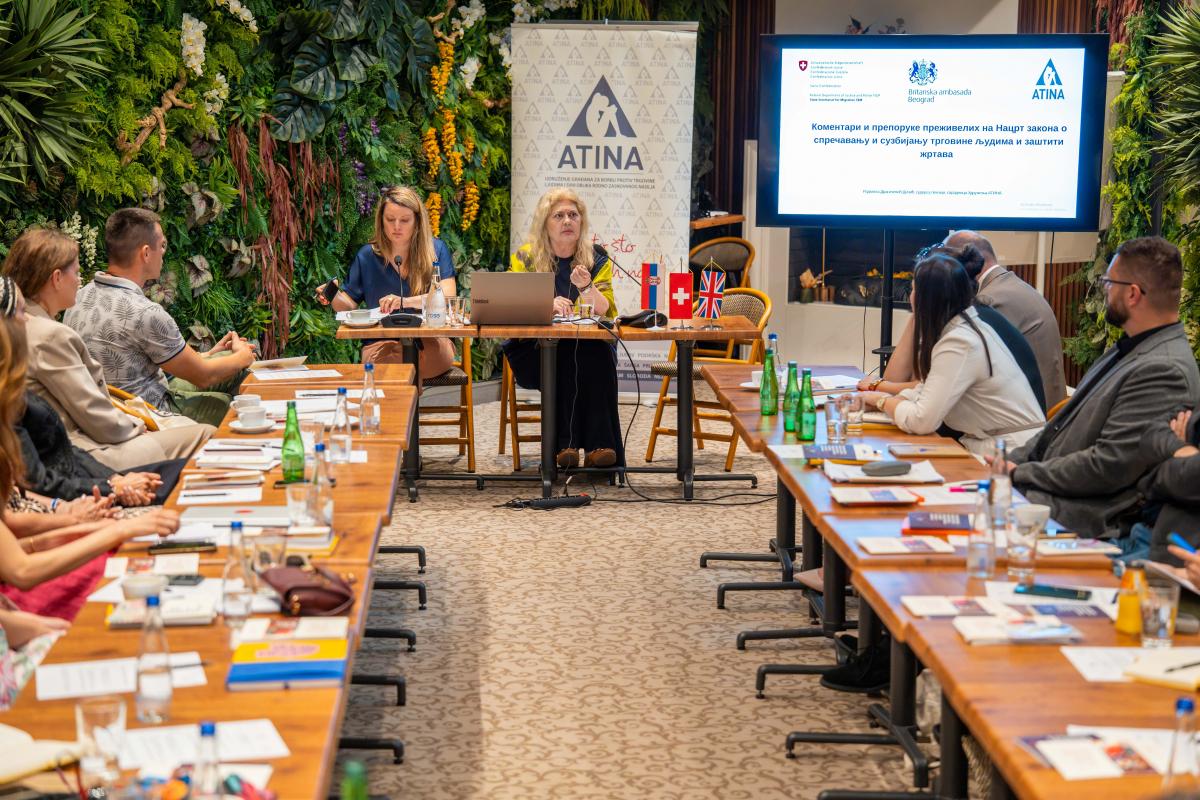
Rather than analysing the Draft Law as a legal document, the women discussed whether the proposed solutions were understandable and applicable, what obstacles victims might encounter, and what would be needed for protection and access to rights to work effectively in practice. Their experiences with the police, prosecutors’ offices, courts, social welfare centres, healthcare institutions and other parts of the system provided an important perspective on how legal provisions look from the point of view of those whose lives they directly affect.
Among the issues they identified as particularly important were the right to information, privacy and personal data protection, the recovery and reflection period, safety, financial compensation, the identification procedure and the way the Central Register of Victims of Trafficking in Human Beings is maintained. They particularly emphasised the right to information, as timely, complete and understandable information largely determines a person’s ability to exercise other rights.
They also highlighted the need for continuous training of police officers and prosecutors, specially trained contact persons within institutions, accessible legal and psychological support, and stronger specialised services for victims.
An important message from the women was that their participation should not end with providing comments on the Draft Law. They expressed their willingness to contribute to its implementation, the training of professionals and prevention activities, as well as to provide support to other trafficking survivors.
Their participation demonstrates that survivors are not only beneficiaries of the protection system but also important actors in its development and improvement.
Identifying victims in mixed migration flows
Another important topic of the Ninth Community of Practice was the identification of trafficking victims in mixed migration flows in Serbia.
Mitar Đurašković, a retired colonel and associate of the NGO Atina, presented an analysis of the challenges, risks, and systemic shortcomings in identifying victims among migrants, refugees, and foreign workers, along with recommendations for improving the identification and protection system. The analysis highlighted the large number of contacts that different institutions have with migrants, refugees and foreign workers, compared with the very small number of recognised trafficking victims, raising questions about the effectiveness of existing mechanisms for recognising risks and identifying victims.
From recommendations to the 2027-2029 Action Plan
The Ninth Community of Practice also provided an opportunity to revisit the problems and recommendations identified during the previous eight meetings through dialogue among institutions, organisations and professionals involved in preventing trafficking and protecting victims.
In the final part of the meeting, participants considered which of these recommendations remain particularly important for the new Action Plan for 2027-2029 and discussed priorities for improving prevention, identification, protection, support and reintegration of victims. Through the event evaluation, they also identified concrete changes to consider when defining future priorities.
This is one of the important values of the Community of Practice: problems identified through direct work with victims should not remain the experience of a single professional, institution or organisation, but should be jointly analysed and translated into recommendations for improving policies and practice.
Survivors’ experiences as a driver of change
The new Action Plan presents an opportunity for the knowledge that already exists in practice - in the experiences of survivors, professionals who work with them every day, and institutions and organisations providing support - to become part of concrete state measures for the coming period.
For NGO Atina, it is particularly important that the voices of people with lived experience of trafficking are not treated as an add-on to this process, but as one of the sources on which decisions are based. When survivors’ experiences are systematically collected and analysed, they can reveal barriers that are not always visible in laws, regulations and procedures and contribute to improving support and protection.
This is also the essence of the Community of Practice: to bring survivors’ experiences together with the knowledge and experience of professionals and institutions, translate them into recommendations, and enable those recommendations to contribute to changes in policy and practice.
The Ninth Community of Practice was held within the project “Together for Her: Community-Based Protection and Empowerment - Comprehensive Support for Migrant and Refugee Women in Serbia”, implemented with the support of Switzerland, and the project “Safety. Justice. Recovery. Supporting and Empowering Survivors of Human Trafficking and Modern Slavery in Serbia”, supported by the British Embassy in Belgrade.



 FACEBOOK
 TWITTER
 YOUTUBE