Hotline: +381 61 63 84 071




Lidija Đorđević: Support must be continuous - otherwise, it is not support
Lidija Đorđević: Support must be continuous - otherwise, it is not support
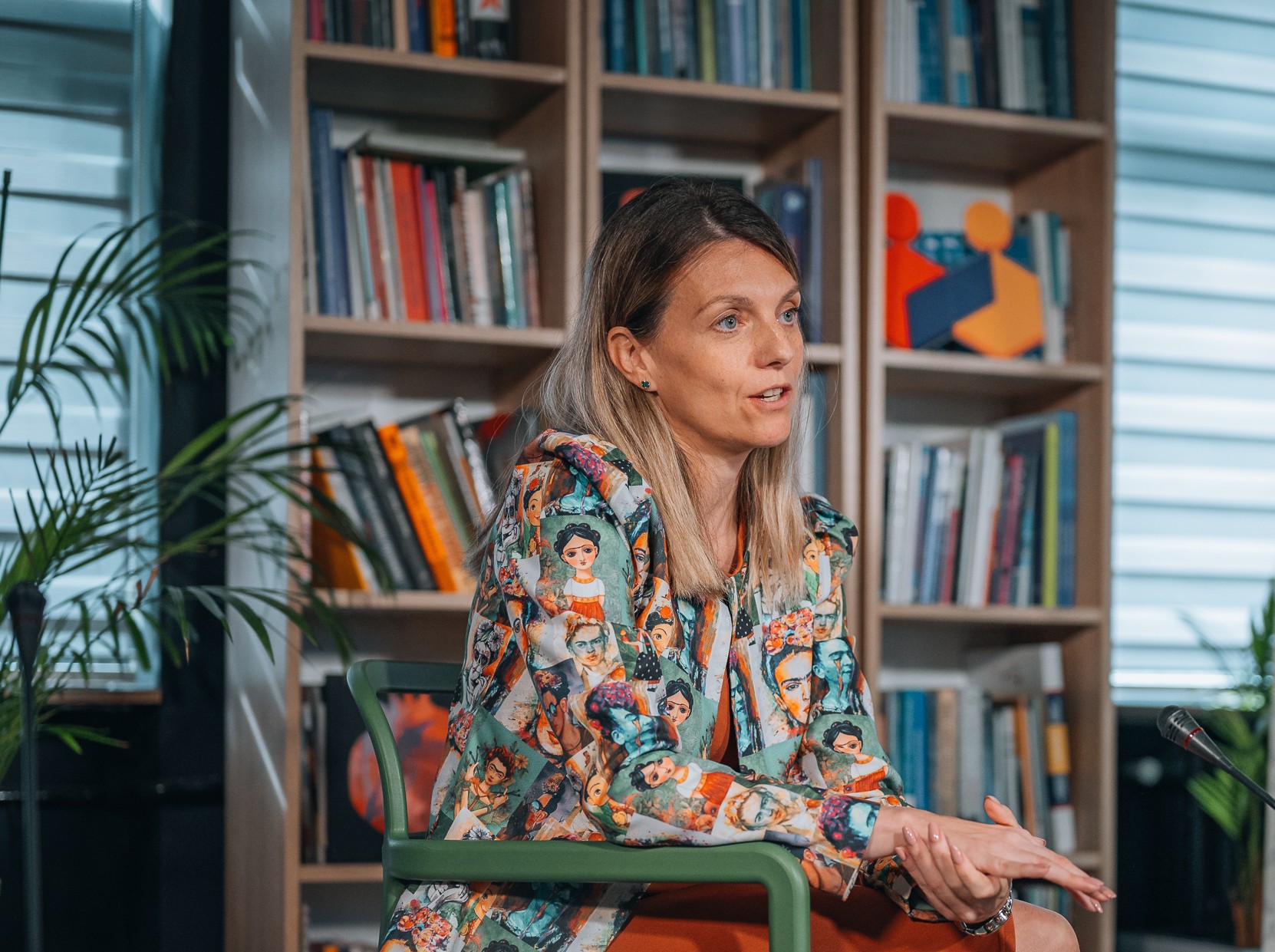
A conversation with Lidija Đorđević, coordinator of the direct support programme for trafficking survivors at NGO Atina
Photo: Marija Piroški
When we talk about supporting women who have survived human trafficking, we often think of emergency interventions, safe accommodation or assistance in times of crisis. But what happens afterward? What happens when the spotlight fades, court proceedings drag on, and a woman is left alone to deal with the consequences of violence?
For more than ten years, Lidija Đorđević has been working precisely where support is needed most, alongside women trying to rebuild their lives after exploitation and violence. Today, she coordinates Atina’s direct support programme and the team that provides support to women across Serbia every day.
In this conversation, she talks about trust, the system's responsibility, and the challenges of long-term work, but also why continuity of support is often more important than assistance itself. Lidija reflects on where the system fails, what quality support really means, and why trust can take years to build but only a moment to lose.
Today, more than ever, Lidija believes that recovery is possible only with long-term support and relationships of trust built over years. Yet she says that this work is more difficult today than when she first started.
“I think providing support and the recovery process are much more difficult and complex today than they were ten years ago. There are few allies and many challenges. What we have today is our team and the women we work with. We rely on one another. Today, I meet women I first started working with many years ago. When I see them, I feel overwhelming pride. I am proud of everything they have overcome after surviving violence and of who they are today.”
The internet remembers even when survivors are trying to forget
“Over the past decade, we have witnessed changes in the social context, as well as in the ways human trafficking takes place. In the past, we did not talk nearly as much about the digital space as a place where recruitment and exploitation occur. Today, the consequences of human trafficking can remain permanently present through photographs, videos and personal data circulating online. Children and young people are particularly at risk. This requires a much more complex network of support than before.”
At the same time, we are increasingly providing support to migrant and refugee women, whose circumstances are further complicated by language barriers, uncertain legal status and difficulties in accessing rights and services.
Although forms of exploitation are changing, one thing in Serbia remains the same: “We still focus more on the consequences than on the causes. The person is not at the centre of our response.”
Where the system fails most
In Lidija’s experience, the most difficult period for survivors often begins precisely when the system is supposed to protect them, during court proceedings.
“The burden of proving the case still falls largely on the survivor herself. Women are forced to revisit traumatic experiences repeatedly as they give testimony before different institutions. There has been progress, but support throughout the proceedings is still neither intensive nor continuous enough.”
It is particularly concerning that information from court proceedings continues to appear in the media and on online news portals. “This sends a message that the system is still not up to the task of protecting survivors.”
Why continuity matters more than assistance
If there is one message Lidija wants to convey, it is that recovery cannot be limited by the duration of a project or a court case.
“It is better not to begin providing support if we cannot ensure continuity.”
“Recovery from trauma is not a one-off event. It is a long process that can take years. There is no universal formula for recovery. That is why support must always be available and tailored to the needs of each woman.”
Quality support adapts to the woman, her needs, and her own pace. It must be available immediately, comprehensive, and unconditional. But above all, it requires persistence and continuity. We are talking about years, not months.
Trust cannot be built overnight
“A relationship of trust is the foundation of everything. The women we work with often have experiences of violence, neglect and betrayal. To be able to trust people again, they need time to recover, consistency and a sense of safety.”
“A few days ago, I received a call from a young woman who had stayed with Atina during the pandemic. She had lost someone close to her and needed to attend the funeral. We talked for a long time, and at the end she said to me: ‘You have such a way of calming me down, and talking to you makes me feel so much better. I remember that from the time when I was at Atina.’ Those words have stayed with me. For me, that is a measure of the quality of support.”
What happens when support ends too soon
“When support disappears, a woman may feel that she has been let down once again, that we are simply the latest in a long line of people who abandoned her when she needed them most.”
Lidija speaks openly about how short-term support can sometimes do more harm than good.
“Sometimes I wonder whether short-term support does more good or more harm. I think it is better not to start the process if we cannot ensure continuity.”
The greatest lesson
After more than a decade of this work, Lidija still finds her greatest inspiration in women who have survived violence.
“From women, I have learned how much hardship and pain a person can survive and still find joy in life and continue to trust people. They have taught me that love, care, and a sense of belonging are what every person needs most.”
“Human beings are an inexhaustible source of strength and resilience. The women I have met at Atina are truly extraordinary in their strength and courage. Seeing their daily struggles gives me strength to continue my own work.”
What it means to stay by someone’s side
At the end of the conversation, Lidija shares a story that perhaps best explains what success means to her.
“A few days ago, a woman I worked with more than ten years ago called me. She wanted to tell me that she was pregnant. She said that her partner had called his parents to share the good news, while the first person she called was me. She has no contact with her own family, and she told me that Atina and the people at Atina are her family.”
“There is nothing more to explain. For me, that is the measure of my personal and professional success,” Lidija concludes.
Perhaps this is precisely where the essence of Atina’s work lies: not only in providing support in moments of crisis, but in making sure that, even years later, women still know there is someone they can turn to.
These activities and this publication were developed as part of the project “Together for her: Community-based protection and empowerment - comprehensive support for migrant and refugee women”, implemented with the support of Switzerland. Atina is solely responsible for the content, which does not necessarily reflect Switzerland's official views.


 FACEBOOK
 TWITTER
 YOUTUBE